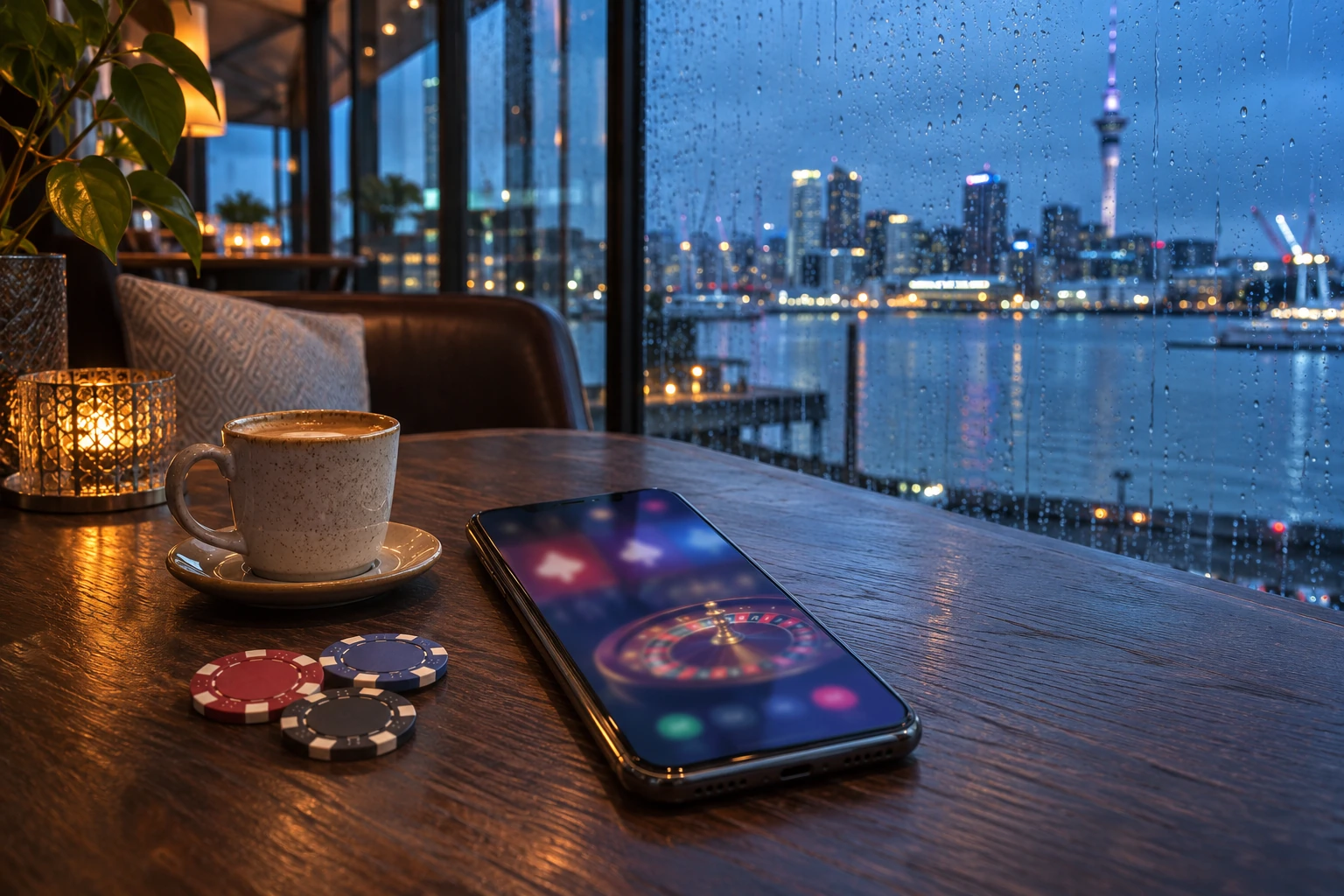

A West Auckland man carried a $20.1 million Lotto ticket around in a book for nearly two months without knowing it had won. In Auckland's city centre, John Kemp was going to work while sleeping outside the Central Library after losing his accommodation to pokie gambling. One man had a fortune waiting to be claimed; the other was trying to get through the night.
Those two lives rarely sit beside each other in gambling coverage. Jackpot winners make headlines. Rent money lost at the pokies, a partner checking the bank account, a family trying to recover: those stories take longer to surface. Both belong to the gambling experience in New Zealand.
When the unbelievable win is genuine
The $20.1 million bookmark in West Auckland
In September 2026, Lotto NZ reported that a West Auckland man had found a Powerball ticket worth $20.1 million in a book. He'd bought it at Blockhouse Bay Postshop & Stationers in July, used it as a bookmark and forgotten about it. The prize went unclaimed for weeks.
He slipped the ticket into his wallet when he found it, then checked it at a shop. The self-service machine signalled a major win; he still wasn't expecting eight figures. He had told nobody and wanted time to think before deciding what to do. A routine purchase had been sitting in plain sight all along.
An Ashburton family and their first home
An Ashburton family won $28.6 million in June 2026: $28 million in Powerball First Division and three $200,000 Lotto First Division prizes. Their ticket held five lines of numbers they'd played for years. The family talked about buying a first home.
Those familiar numbers hadn't become more likely to come up. Each draw is separate; earlier losses don't increase the chance of a win. For this family, the practical change was huge: a first-home plan that once seemed distant suddenly had a budget behind it.
The New Plymouth couple who wanted to help family
In April 2026, a New Plymouth woman checked her ticket on her phone and learned that she and her husband had won $14.3 million with Powerball. Her favourite Powerball number was five. She rang her mother, then called her husband at work. They celebrated with takeaway food and champagne.
Helping family was on their minds, although they had no firm plan for the money. A windfall doesn't settle questions about work, privacy or property overnight. In September 2026, a Richmond family syndicate and a Wellington family shared a $10 million Must Be Won Powerball jackpot after it rolled down to Division Two. The headline sum wasn't what either family took home alone.
Lotto NZ documents these wins, but its winner stories show the tickets that paid out, not the millions of ordinary tickets that didn't. An authentic jackpot account is still a poor predictor of anyone else's chances.
The $125 win that led to years of loss
In 2011, John Kemp ducked into Auckland's Edinburgh Castle pub to escape the rain. He put $2 into a pokie and won $125. He remembered the machine's noise and the possibility of winning again. Soon he was moving between Auckland pubs, playing longer and losing far more than that first payout.
In his account shared by PGF Services, John describes selling possessions, borrowing and working long hours to fund his gambling. He spent rent money on pokies and lost his accommodation in 2017. For roughly two years he slept near Auckland Central Library despite having a full-time job. He used CityFitness showers and relied on Auckland City Mission for meals.

His workmates didn't know he was homeless. He served customers by day and tried to sleep outside the library at night. Temporary accommodation during the 2020 COVID-19 response, followed by help from Lifewise, gave him a way to find stability again. Employment had hidden how precarious his life had become.
The $125 win was genuine. It was also the number John kept chasing long after the money was gone.

The Christchurch casino win that did not last
Colin Edwards, a former competitive sportsman, started gambling after an injury interrupted his sporting life. Working near Christchurch Casino, he tried its machines. In a 2024 NZ Herald interview, he remembered putting in $20 and winning $26,500 almost straight away.
That payout didn't stop the losses. Edwards said casino records showed he'd spent $68,000 over the next two years. He used credit cards and loans, and pawned belongings. His marriage, housing and work suffered. The drive he'd once put into sport had found a new outlet, but he couldn't train his way to a better result on a gaming machine.
Grief, rugby, belonging: the reasons behind the bet
Rose Heta Minhinnick and the gambling she grew up around
Rose Heta Minhinnick grew up around housie, cards, racing and the TAB in Ōtara. Gambling was woven into social gatherings. When her mother died and Rose was 21, familiar pubs and pokies became entangled with her grief. At her worst, she was spending up to $10,000 a month.
In a 2024 account for Changing Minds, Rose recalled a family member finally refusing to pay for groceries she couldn't afford. Family, kaupapa Māori services and culturally responsive support became central to her recovery. At the time of that interview, she'd been free of gambling and alcohol for ten years and was supporting others with her lived experience.
There was more at stake for Rose than money. Those places held memories of her mother. Leaving the pokies meant finding another way to handle grief and stay close to people.
Tahu Hollis: rugby dreams and a costly shortcut
Tahu Hollis moved from Manaia to Karaka to pursue rugby with Counties Manukau. Gambling followed the sporting social scene and the lure of quick cash. He'd lost more than $20,000 before turning 20. His account, published by Gambling Harm Awareness Week in 2025, describes chasing losses, lying to his parents and reaching an emotional crisis.
His father came to collect him when he was struggling. Tahu's recovery took time. He questioned his rugby plans, reconnected with whānau and found a place for video-making, storytelling and cultural identity. His idea of a win changed too: being with family without another bet hanging over him.
From the TAB counter to the phone in your pocket
Phone access can make betting easier to hide. University of Auckland student Jun Leong told a 2026 news report that NBA and UFC bets began at about $50 a week; after losses, he used $1,000 from his student loan to chase them. He later deleted betting apps and reduced exposure to promotions.
AUT's Te Waha Nui reported that Ricky's casual $5 bets grew to a substantial share of his weekly pay, while in-play wagers and group-chat tips made them feel routine. In The Bet podcast, Sally describes online casino play becoming an obsession; Andrew discusses sports-betting relapses and separation, and Mele describes years of hidden gambling. Their circumstances differ, but each story includes costs kept from others.
The people who never placed the bet still live with it
Partners, children and wh?nau can feel the effects through unpaid bills, secrecy and tension. Asian Family Services described Simon, who spent about 40% of his income on TAB betting and accessed his partner's account; counselling and rebuilding trust were part of his recovery. The names in client case studies come from the publisher and are not independently confirmed here.
The same organisation wrote about Hamilton couple Priya and Raj, whose casino and Lotto spending affected retirement plans, and their daughter also sought support. In The Bet, Ivan describes childhood instability as his father's gambling debts led to possessions being sold. Harm can continue beyond the person placing the bet.
How to recognise a real gambling story rather than a sales pitch
A large balance or photograph does not verify a win. In 2026, Rangi?tea Stewart said scammers used her photographs and a false name in a fabricated gambling success story. A 2025 1News report described an AI-generated promotion using Jenny-May Clarkson and Taika Waititi without their genuine endorsement.
Check who published a story and what evidence supports it. Lotto NZ may identify a draw, prize and claim period while keeping winners private; recovery accounts can be traced to the service or journalist. Anonymous winners are not automatically fake, but the publisher's evidence and reputation matter more when details cannot be checked.
Treat a story as promotional if it turns hardship into a guaranteed jackpot, recommends one app or hides who paid for it. Verify its claims independently before following a referral link.
What stays with people long after the draw
One West Auckland man found a fortune in a book. An Ashburton family could look for a first home. John Kemp's gambling had cost him his. Rose, Tahu and others faced the slower task of making family life and finances steady again.
The wins are real. So are the losses, although fewer of them come with a photograph or a headline. The detail that survives after the draw isn't always the sum on the ticket. It may be a missing rent payment, a call from a parent or the first night someone can sleep indoors again.