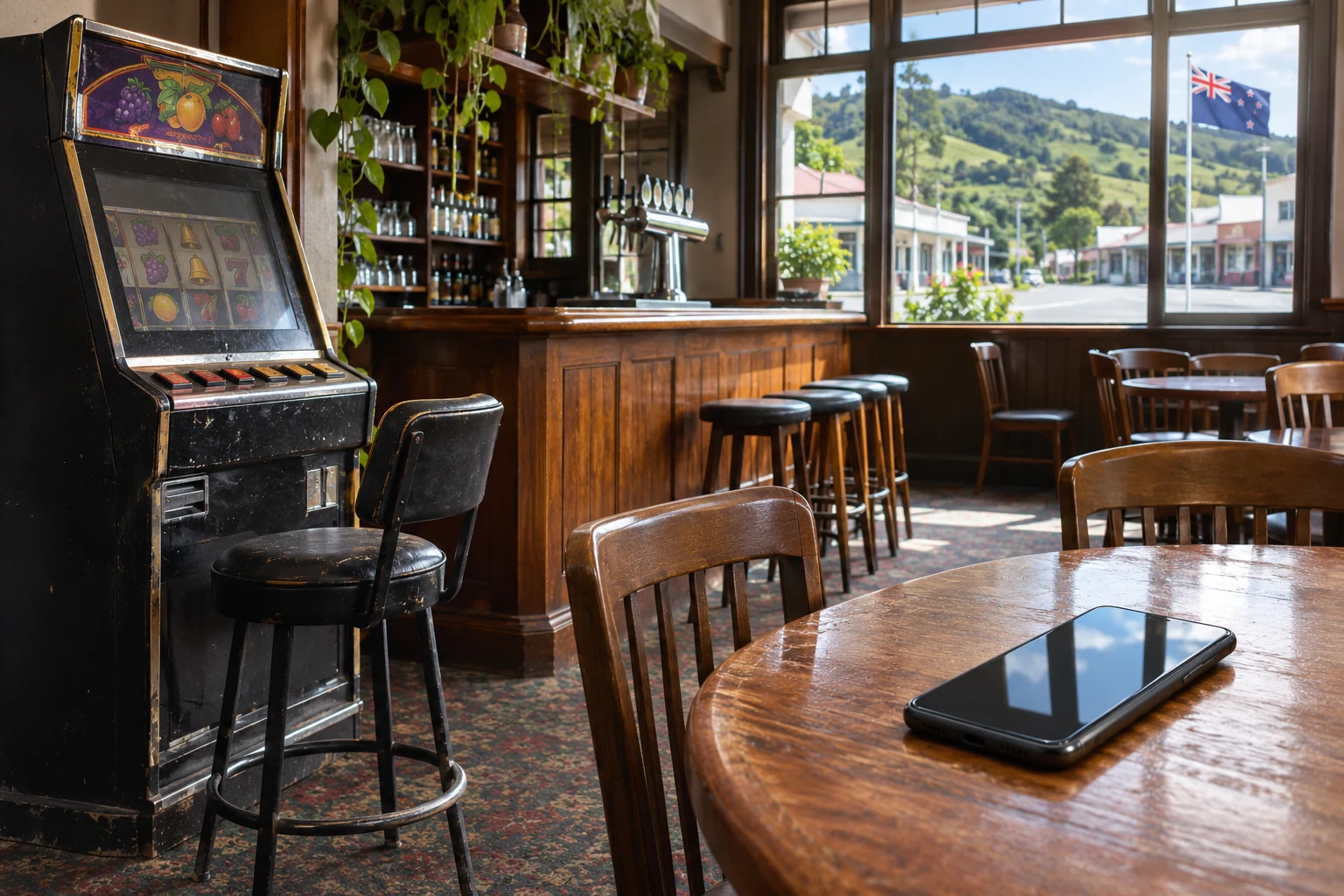
For decades, a row of flashing pokie machines behind a pub door was one of the most recognisable sights in New Zealand gambling. A night at a casino meant travelling to Auckland, Christchurch or another city with a licensed gaming floor. Today, casino-style games can appear on a phone without the player leaving home.
The shift from pokies to online casinos is bigger than a change of screen. It has altered where gambling happens, who provides it, how money reaches local communities and what protection a player can expect. New Zealand's response has been distinctive: pub pokies were built into a community-funding system, while online casino gambling grew largely through offshore websites before a new licensing law took effect in 2026.
That history explains an apparent contradiction in Kiwi casino life. Physical pokie venues have become fewer, yet the money lost on those machines remains substantial. Online gambling has grown, but much of what New Zealanders do online involves Lotto or TAB rather than casino games. Understanding the difference matters more than treating every digital bet as an online casino visit.
How pokies became part of Kiwi life
Gambling was part of Aotearoa long before electronic gaming machines. Early settlers wagered on cards and sporting contests; horse racing and the totalisator later developed a strong following. Housie, raffles, the Golden Kiwi lottery and eventually Lotto created different ways of taking a chance, often linked to clubs, fundraising or a regular social occasion. Lotto began in 1987, one year before a decisive change for pokie machines.
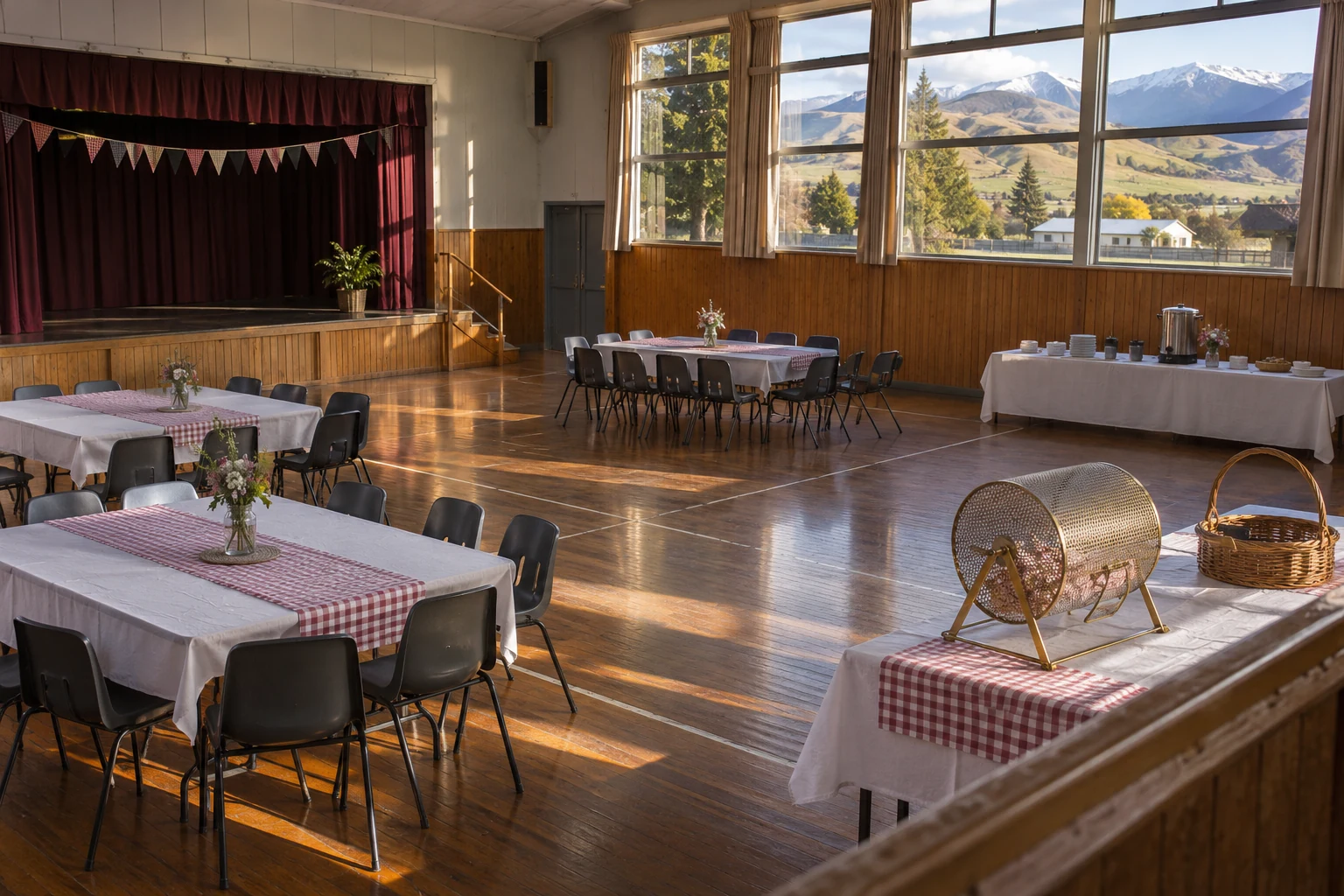
In 1988, the government legalised electronic gaming machines in hotels and clubs. Known as pokies in everyday New Zealand English, the machines brought casino-like play into neighbourhood pubs, sports clubs and Returned and Services' Association (RSA) venues. People no longer needed to visit a dedicated casino to see spinning reels, winning symbols and jackpot displays.
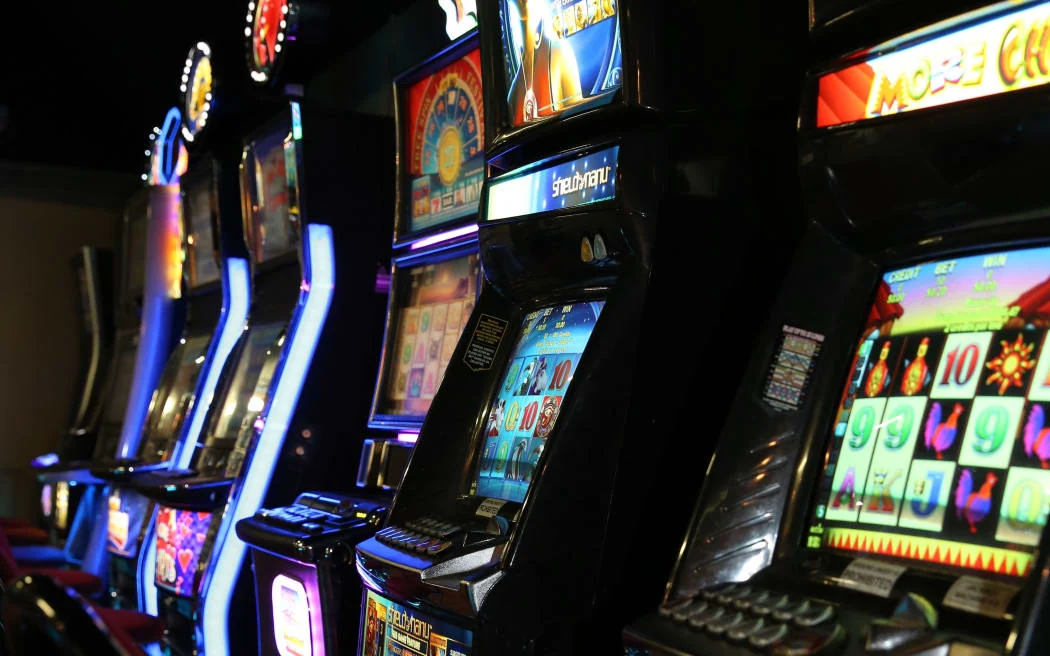
Pub and club machines eventually became known as Class 4 gambling under the Gambling Act 2003. They are not simply smaller versions of casino businesses. Class 4 gambling is operated by licensed societies or clubs for authorised, non-commercial purposes, with regulatory rules governing venues, machines and the use of proceeds.
That structure made pokies unusually visible in community life. A machine could sit a short walk from a local rugby club whose equipment or travel costs were supported by gaming grants. The link between gambling losses and community benefits would become one of the most contested features of the system.
From the pub gaming room to the casino floor
Parliament permitted casinos in 1989. Christchurch Casino opened in November 1994, becoming New Zealand's first casino, and SkyCity Auckland followed in February 1996. Casinos later operated in Hamilton, Dunedin and Queenstown, adding roulette, blackjack, baccarat and other table games to the electronic machines familiar from pubs.
The venue changed the social setting. A casino could combine gaming with restaurants, bars, hotels, tourism and nightlife. SkyCity Auckland developed into a recognisable part of the central-city entertainment landscape; Christchurch Casino became a major South Island venue. The attraction was no longer just a bank of pokies. It was a destination with dealers, tables, visitors and an atmosphere that could not be reproduced by a standalone machine in a local bar.
Historical accounts frequently refer to six New Zealand casinos, including two in Queenstown. That figure needs a date attached. SkyCity Wharf Casino closed in March 2020, and its venue licence was surrendered in March 2024. The remaining SkyCity venues are Auckland, Hamilton and Queenstown, alongside Christchurch Casino and Dunedin Casino.
The distinction between casino pokies and Class 4 pokies remained important. Both use electronic gaming machines, but they operate under different licensing and community-return arrangements. A familiar game mechanic does not make the businesses behind it interchangeable.
How the internet brought casino games into the home
Broadband, computers and smartphones brought slots and table games into the home. Online games retained familiar reels and bonus rounds; live-dealer streams added a human presenter. This was a gradual change, not a mass departure from pubs: land-based pokies, Lotto, TAB betting and casinos continued alongside offshore sites.
A notable local step came in August 2019, when SkyCity launched an offshore casino through Malta-based SkyCity Malta, using Gaming Innovation Group technology and services. Online access reduced the need to travel to a venue, but also removed its physical boundaries and routines, such as a visible cashier or the trip home.
What changes when a pokie goes online?
Moving a game to a phone changes its reach and pace more than its basic gambling maths. A wider choice of themes or bonus features does not guarantee better odds; for the mechanics of online slots, see the slots guide.
What the New Zealand numbers reveal
- The New Zealand Gambling Survey 2023/24 found that 64.1% of people aged 15 and over had gambled in the preceding year. Around 31.1% reported some form of online gambling, while 3.6% reported gambling through overseas websites. The larger online figure includes activities such as Lotto and TAB betting. It should not be presented as the percentage of New Zealanders using online casinos.
- Spending figures need similar care. The Department of Internal Affairs (DIA) expenditure series records approximately NZ$1.037 billion in losses on non-casino gaming machines in 2023/24. Total player losses across the four established sectors - non-casino pokies, casinos, Lotto NZ and TAB NZ - were about NZ$2.792 billion. Those figures describe operator revenue from the specified regulated activities, not the total amount wagered on every gambling product or all spending on offshore casino sites.
- The physical network has shrunk. DIA's June 2026 quarterly figures counted 13,613 Class 4 gaming machines across 948 venues. Fewer locations do not automatically mean less gambling harm. A smaller number of machines can still absorb substantial losses, and digital gambling creates access beyond a local council's venue boundaries.
One tempting story is that online casinos simply replaced the pub pokie machine. The evidence supports a more complex picture: different gambling formats overlap, and the most widely quoted online-participation statistic covers activities that are not casino gambling at all.
From local machines to a national digital market
The regulatory responsibilities now reflect two different worlds. Local councils can apply caps or sinking-lid policies to Class 4 venues, limiting new pokie locations or replacement machines. The Gambling Commission deals with casino licensing matters. The DIA administers Class 4 regulation and is establishing the online casino licensing system. A council can restrict the next gaming room in its district; it cannot control an offshore website through a venue-location policy.