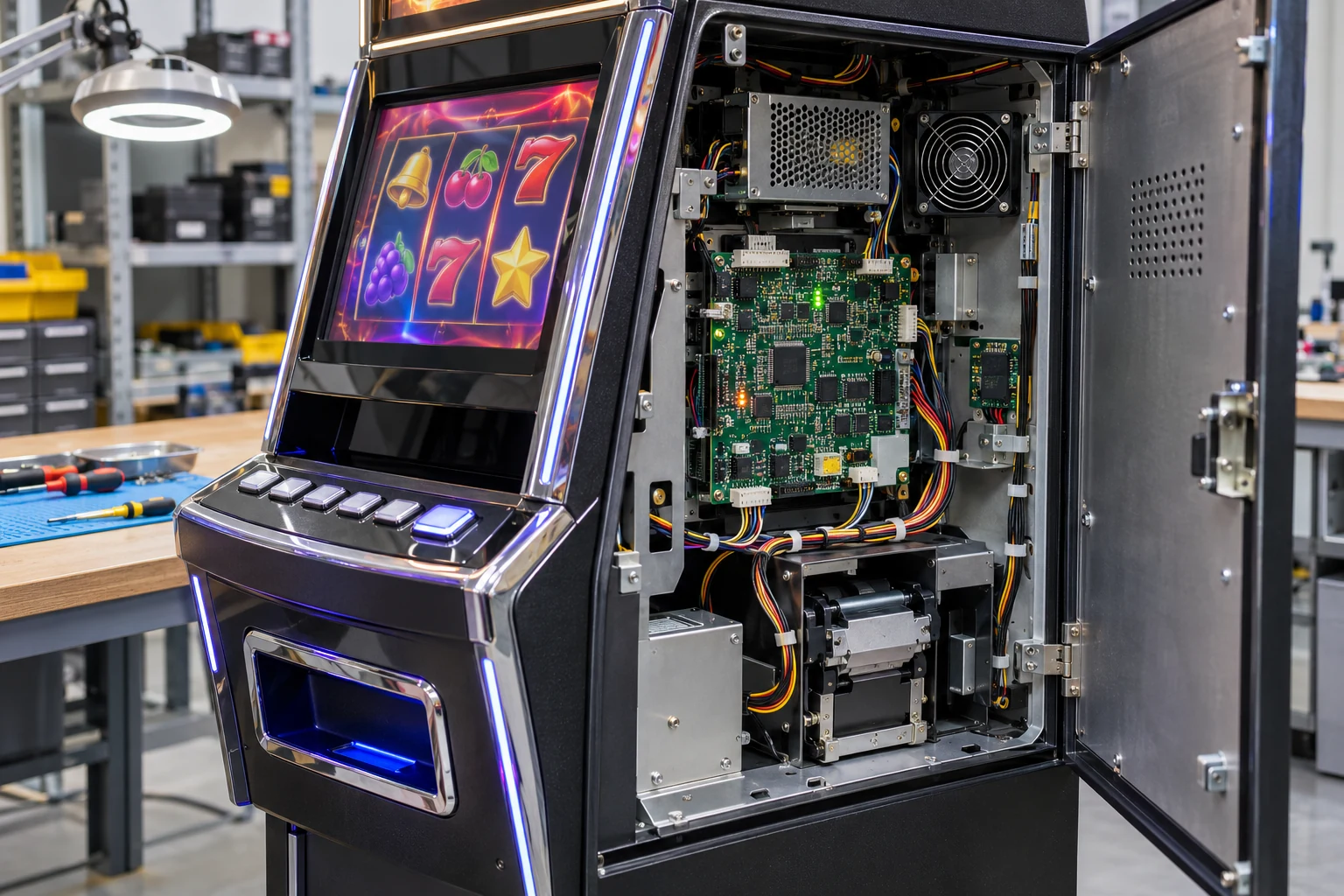
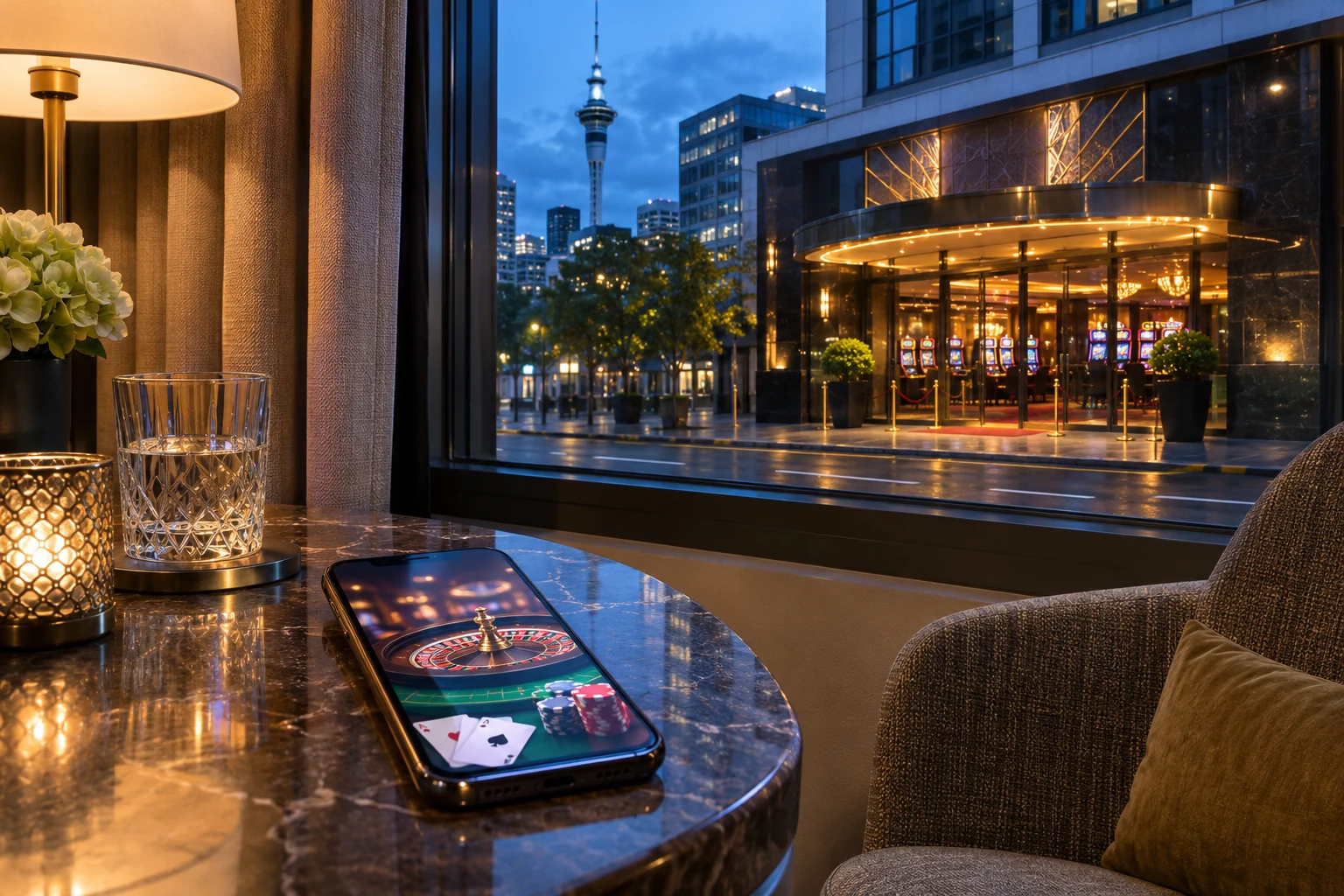
An evening at SkyCity Auckland and a few rounds of roulette on a phone share the same basic gambling maths. Everything around the bet is different. A physical casino offers a night out, real tables and people to talk to; an online casino removes the journey, puts far more games within reach and makes it easier to lose track of time. For New Zealanders, the choice also involves two separate legal systems, with new online casino licensing rules being introduced during 2026 and 2027.
The short answer: land-based casinos make more sense for people who want a social occasion and immediate access to an on-site cashier. Online casinos suit people who put a premium on accessibility, game choice and playing at their own pace. Neither gives players a reliable way to make money, and neither is automatically safer or more generous. The rules of the game, the safeguards around it and the total cost of a session matter more than the screen or the casino floor.
Online vs land-based casinos: a quick comparison
What counts as a traditional casino in New Zealand?
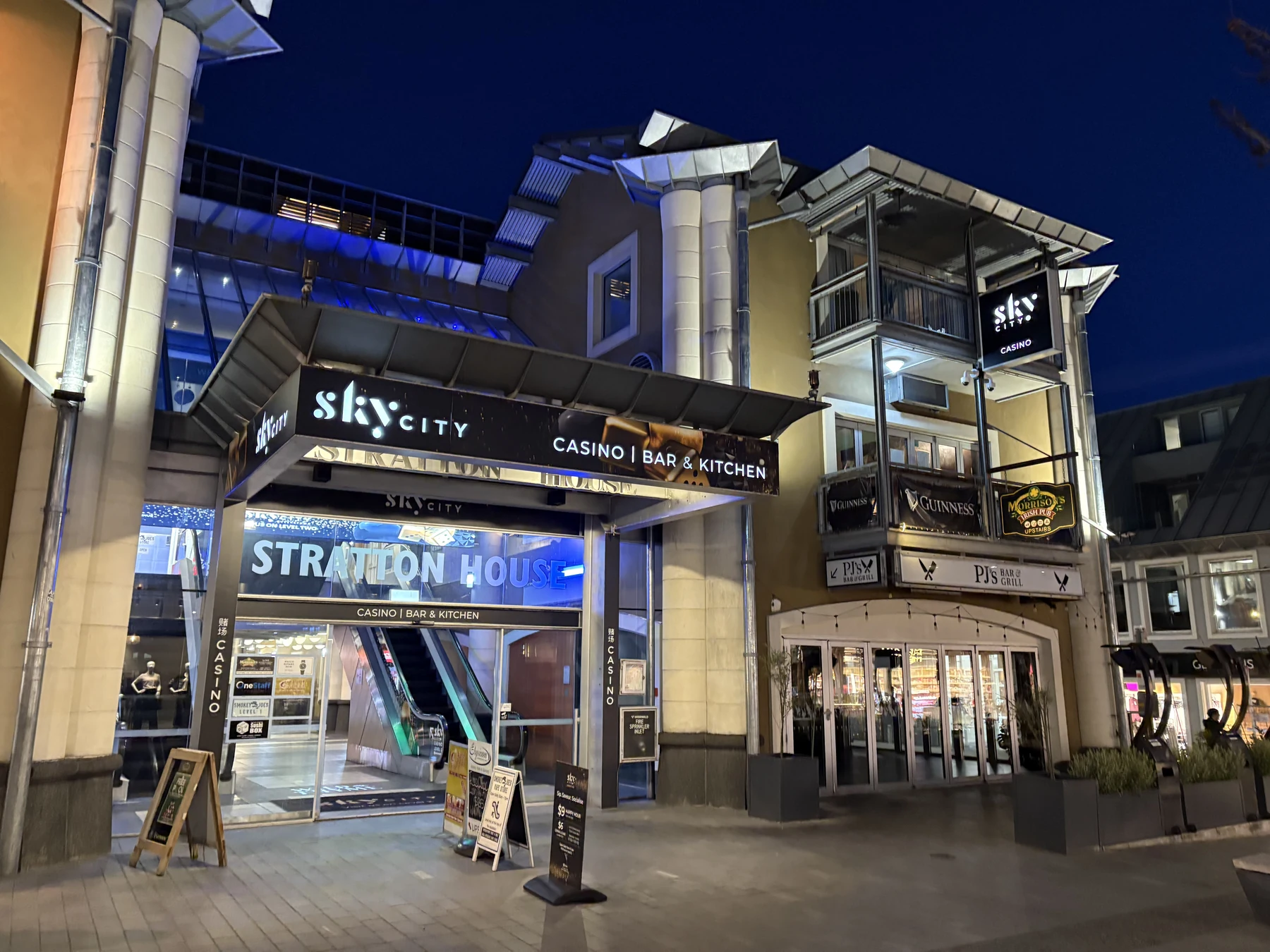
A traditional casino is a licensed, bricks-and-mortar gambling venue with a dedicated gaming floor. New Zealand has five operating casinos: SkyCity Auckland, SkyCity Hamilton, SkyCity Queenstown, Christchurch Casino and Grand Casino Dunedin. They are spread across the North and South Islands, so the nearest casino can be a substantial trip for people outside those centres.
Older casino lists often name six venues. The missing venue is SkyCity Wharf Casino in Queenstown, which closed in 2020 and surrendered its licence in March 2024. SkyCity Queenstown on Beach Street remains a separate operating casino. SkyCity's own casino licence information records the distinction.
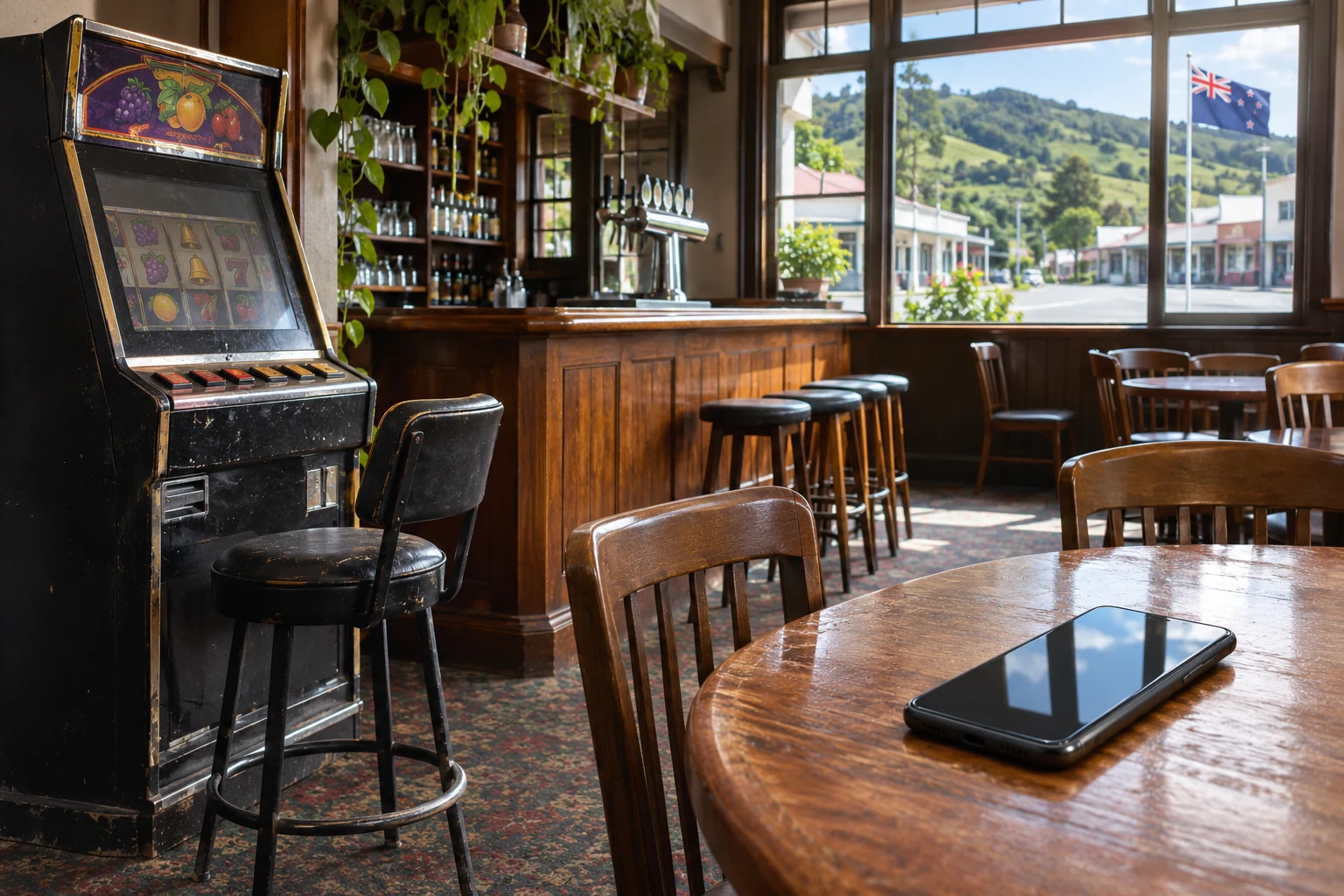
A pub or club with pokies is not the same thing as a casino. Those gaming machines generally fall under Class 4 gambling rules, while entry to a New Zealand land-based casino gambling area is 20+. The new licensed online casino framework sets an 18+ minimum. A sports bet placed through TAB NZ, a Lotto NZ ticket and a casino blackjack hand are different gambling products again. Grouping them together makes legal and payout comparisons misleading.
The experience: a night out or a screen?
What a physical casino does better
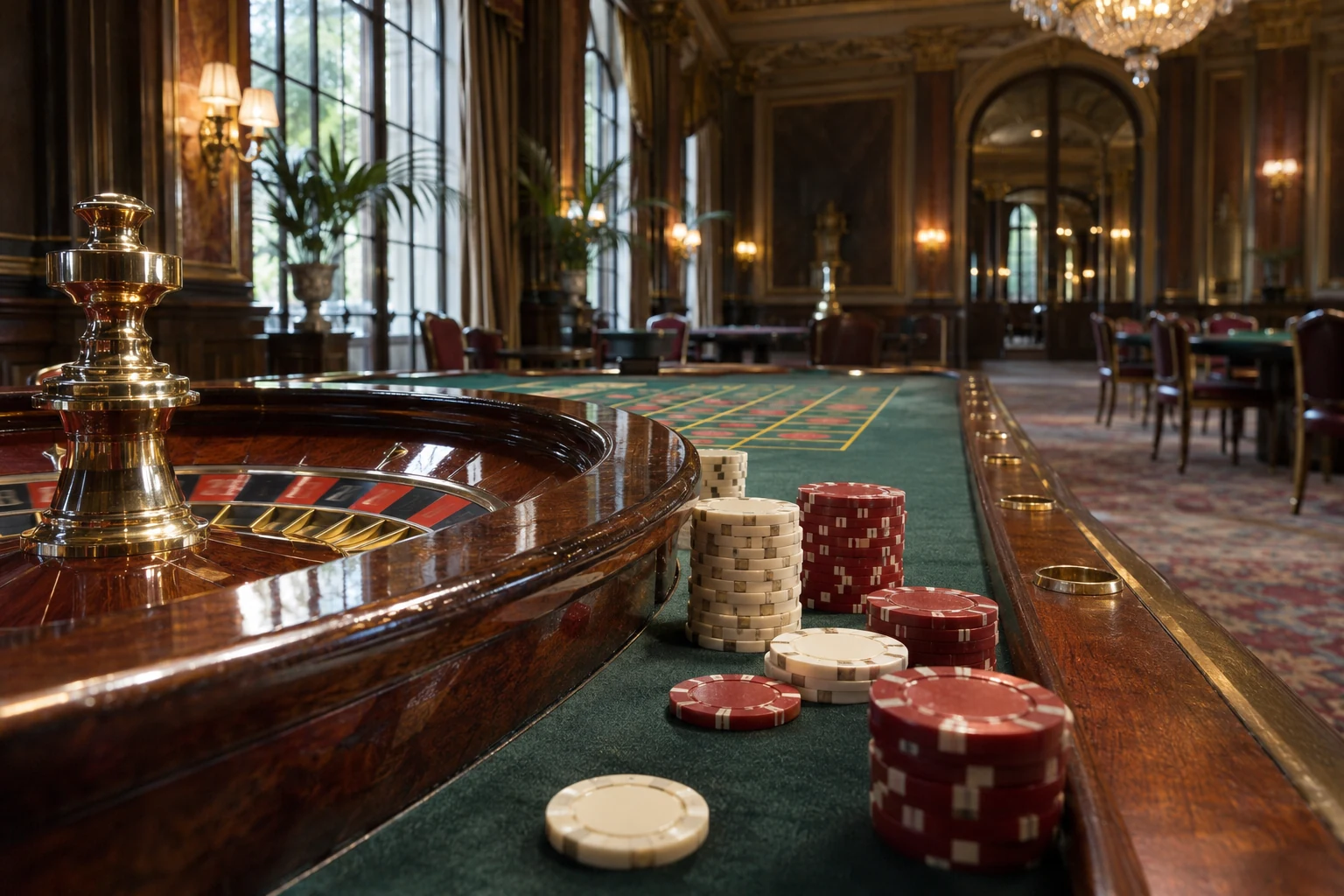
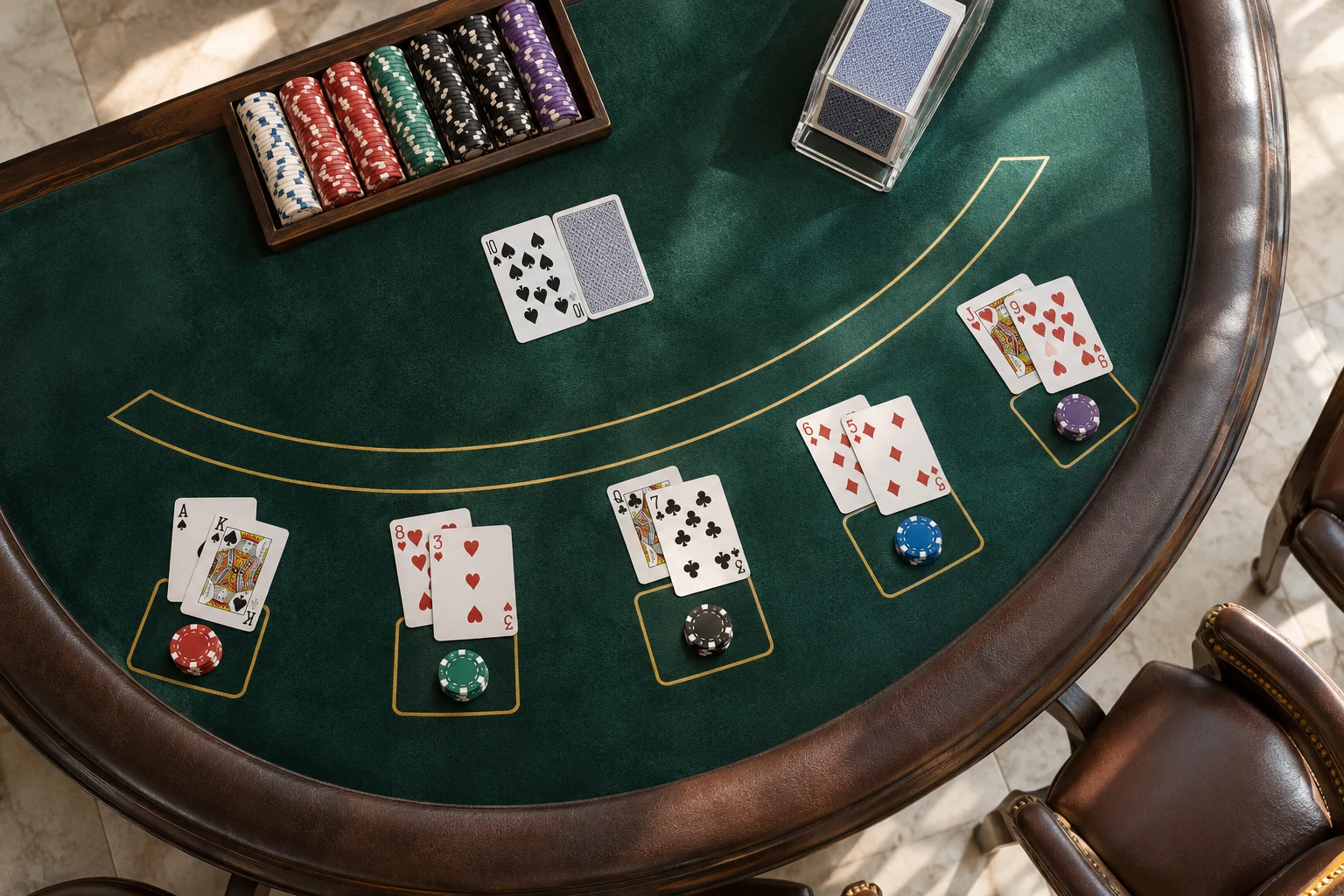
In Auckland, a visit to SkyCity can sit alongside dinner, a show or a trip into the city centre. Queenstown visitors can combine the casino with an evening around the lakefront. At a staffed blackjack or roulette table, players handle chips, follow a croupier's pace and read the mood of the room. The conversation, dress expectations, music and surroundings are part of the outing, not just decoration around a bet.
That atmosphere has a price. Travelling, parking, taxis, food and accommodation can add more to the evening than the amount intended for gambling. Crowded tables, a noisy gaming floor and an unfamiliar dress code may also be unappealing. A real dealer can explain a table's procedures, but cannot change its mathematical odds.
What changes when a casino moves online
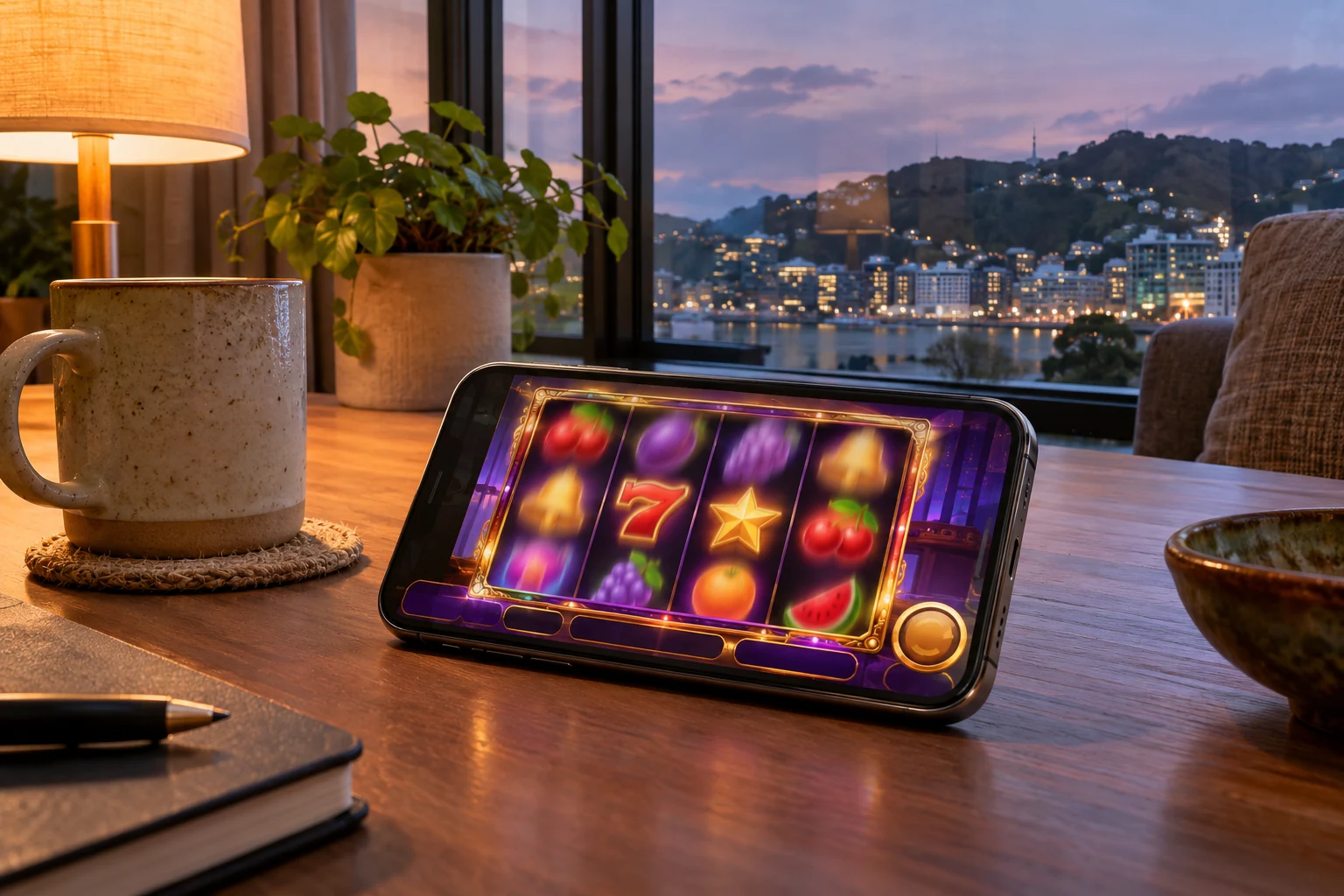
Online casinos run through websites, mobile browsers or dedicated apps. An Android phone, an iPhone, an iPad or a desktop computer can provide access without a trip to Auckland, Hamilton, Christchurch, Queenstown or Dunedin. That difference is particularly noticeable for people living in rural areas or towns without a casino.
Digital convenience is not friction-free. Registration, identity verification, banking checks, device compatibility and customer-support queues can interrupt play. A weak connection can affect a streamed table; a busy app may feel less personal than talking to a member of casino staff. The privacy of a home screen is a genuine advantage for some adults, but it also removes the natural boundary created by leaving a venue.
Live dealer casino games bridge part of the gap. A human dealer runs blackjack, baccarat or roulette in a studio, with the game streamed to players and chat available on some tables. The cards and wheel are real; the surroundings, payment process and conversation still differ from being physically seated at the table.
Which format has the better games?
Land-based casinos offer a smaller set of staffed games and physical poker tables, which can suit someone who values a social evening or a few familiar choices. Online catalogues span more studios and formats, but the operator's licence and approved games still need checking; a supplier's name is not proof of either.
More features do not mean better value. Volatility affects how unevenly a game pays, and high-volatility slots can have long losing stretches despite a large advertised prize. New Zealand's licensed online regime restricts autoplay, simultaneous slot play and certain network progressive jackpots.
Poker also needs a clear distinction: house-banked video poker, online poker against other players and a live tournament have different opponents, costs and rules. The label alone does not tell you what the game offers.
The true cost of playing: stakes, fees and time
Online casinos avoid fuel, parking and taxi fares. They can also make very small bets easier to find. Lower minimum stakes only reduce spending when the number of rounds and session duration remain controlled. A five-cent spin repeated hundreds of times is not automatically cheaper than a few hands at a casino table.
Physical casinos create other expenses: transport, meals and late-night accommodation. They also give people a clearer way to make gambling part of a wider social budget, separate from what they spend on entertainment elsewhere.
For online accounts, check the deposit minimum, withdrawal minimum, currency conversion, transaction charges, bet limits and account-inactivity rules. A site presenting its balance in Australian dollars, euros or US dollars may leave a New Zealand player exposed to exchange-rate costs. The ability to display NZD is useful, but it does not guarantee an NZD bank settlement or eliminate intermediary fees.
Time deserves its own budget. A set end time and a fixed amount of discretionary money give a session a defined boundary. Neither a welcome offer nor an extra hour of play should change that amount.
Cash-outs, banking and privacy
Why a casino cage feels faster
A physical casino normally handles eligible chip redemptions and cash-outs through an on-site cashier. Identification and reporting requirements still apply, especially to particular transactions. Access to a cashier does not mean that every amount can be collected instantly, in cash and without questions.
Why online withdrawals take longer
At an online casino, a winning balance is not the same thing as money returned to a bank account. The operator may first check identity, age, payment ownership, source of funds and compliance with its terms. This is often called KYC, or Know Your Customer, and overlaps with anti-money-laundering controls. A withdrawal can then move through internal approval and bank or payment-service processing.
Payment options mentioned in international casino listings include debit cards, bank transfers, e-wallets such as Skrill or Neteller, and services such as POLi. Some overseas sites also list Bitcoin or other cryptocurrencies. Availability, legality, fees and withdrawal support differ by operator; the appearance of a payment logo is not a guarantee that the method works for a New Zealand account. Crypto transactions introduce wallet mistakes and exchange-rate volatility rather than eliminating risk.
Under the Online Casino Gambling Regulations 2026, operators in the new NZ-licensed system cannot accept payment methods involving credit contracts, including credit cards. The rules also govern deposit and withdrawal methods. Older articles suggesting that credit-card deposits are a standard option for every Kiwi player miss that distinction.
Online gambling can feel anonymous because no one at a gaming table can see the player. A legitimate gambling account still creates a record of identity, transactions and activity. Privacy comes down to who can access those records and how they are protected, rather than an absence of data. Strong passwords, two-factor authentication (2FA), secure HTTPS connections and a clear privacy policy matter. Encryption alone says nothing about whether a casino will honour a withdrawal.
Which option gives players more protection?
A venue has visible staff and host-responsibility duties, but staff cannot observe every decision. Online accounts can provide spending records and limits, while a phone also makes rapid, uninterrupted play easier. Neither setting is automatically safer; licensing, game controls and access to help matter.
NZ's 2026 rules for licensed online casinos require safeguards including time, deposit and spending limits, breaks, alerts and self-exclusion. They also prohibit autoplay and playing multiple online slots at once. These requirements do not establish that every offshore site has equivalent protections.
If someone is chasing losses, hiding play or using household money, changing formats is not a solution. Self-exclusion and specialist help are more appropriate; Safer Gambling Aotearoa and the Gambling Helpline (0800 654 655, text 8006) offer support.
Which is the better fit for different Kiwi lifestyles?
A couple planning an Auckland or Queenstown night out
A physical casino has a clear advantage when the goal is dinner, conversation and a little time at a table. The gaming floor is only one part of the evening. Travel and hospitality expenses still need to be included in the budget.
Someone living well outside a casino city
Online access removes a major geographic barrier. That convenience is meaningful for a rural New Zealander who would otherwise need a long drive or overnight stay. The trade-off is losing the natural stopping point created by a trip home.
A player interested in a specific game variation
An online library has more room for unusual blackjack rules, roulette formats, video poker and themed pokies. The right comparison is between the actual paytables, stake sizes and conditions of the two available games, not the total number of titles in a lobby.
Someone who values face-to-face contact
A physical table is more suitable when conversation with the dealer and other players matters. A live-streamed dealer can offer real-time interaction, but a chat window and a studio feed do not reproduce being part of the room.
Someone who struggles to stop once play begins
Neither is a sensible substitute for a firm break from gambling. Online account limits can help, and physical venue exclusion options also exist. A different platform does not remove the urge to chase losses.
Questions worth answering before money changes hands
- Who regulates the operator- A venue's NZ licence can be assessed through local authorities. For online play, the relevant NZ public register will become the clearest check once licences are issued; an overseas licence must be checked with the issuing regulator rather than accepted from a logo.
- What happens to a withdrawal? Check verification requirements, processing stages, minimum and maximum amounts, fees and the complaints process before assuming that a displayed balance is accessible cash.
- How expensive is the actual game? Look at the paytable, rules, RTP where published, volatility, minimum stake and likely pace. A large catalogue or a spectacular jackpot says little about value.
- Where are the stopping controls? Online accounts should make limits, time-outs and exclusion routes easy to find. At a physical venue, check the host-responsibility and exclusion arrangements.
- What is the complete entertainment budget- Count transport and hospitality for a venue visit; count repeated wagers, conversion charges and banking costs for online play. Neither should be funded with money needed for rent, groceries or bills.
Live-dealer tables and casino-floor tables
Is live dealer blackjack the same as blackjack at SkyCity?
Both can involve a human dealer and real cards, but the table rules, betting limits, pace, technology and social setting can differ. A streamed game is not necessarily operated by the same company or under the same licence as a SkyCity physical venue.
Can an online casino pay out faster than a traditional casino?
An online withdrawal can be quick after an account has been verified, but payment processing may still take time. An on-site cashier can normally redeem eligible chips without an online transfer. Neither channel guarantees immediate access to every prize.
Which is better for New Zealanders?
Traditional casinos suit a planned social outing with real dealers and an on-site experience. Online casinos offer greater geographic access and a wider digital selection, alongside different banking delays and greater exposure to continuous play. For Kiwi players in late 2026, regulatory status is an essential part of that choice: the established physical venues are already licensed, while the new online licensing regime is still being implemented. Both formats retain a house edge, so gambling spending is best treated as the cost of entertainment rather than expected income.