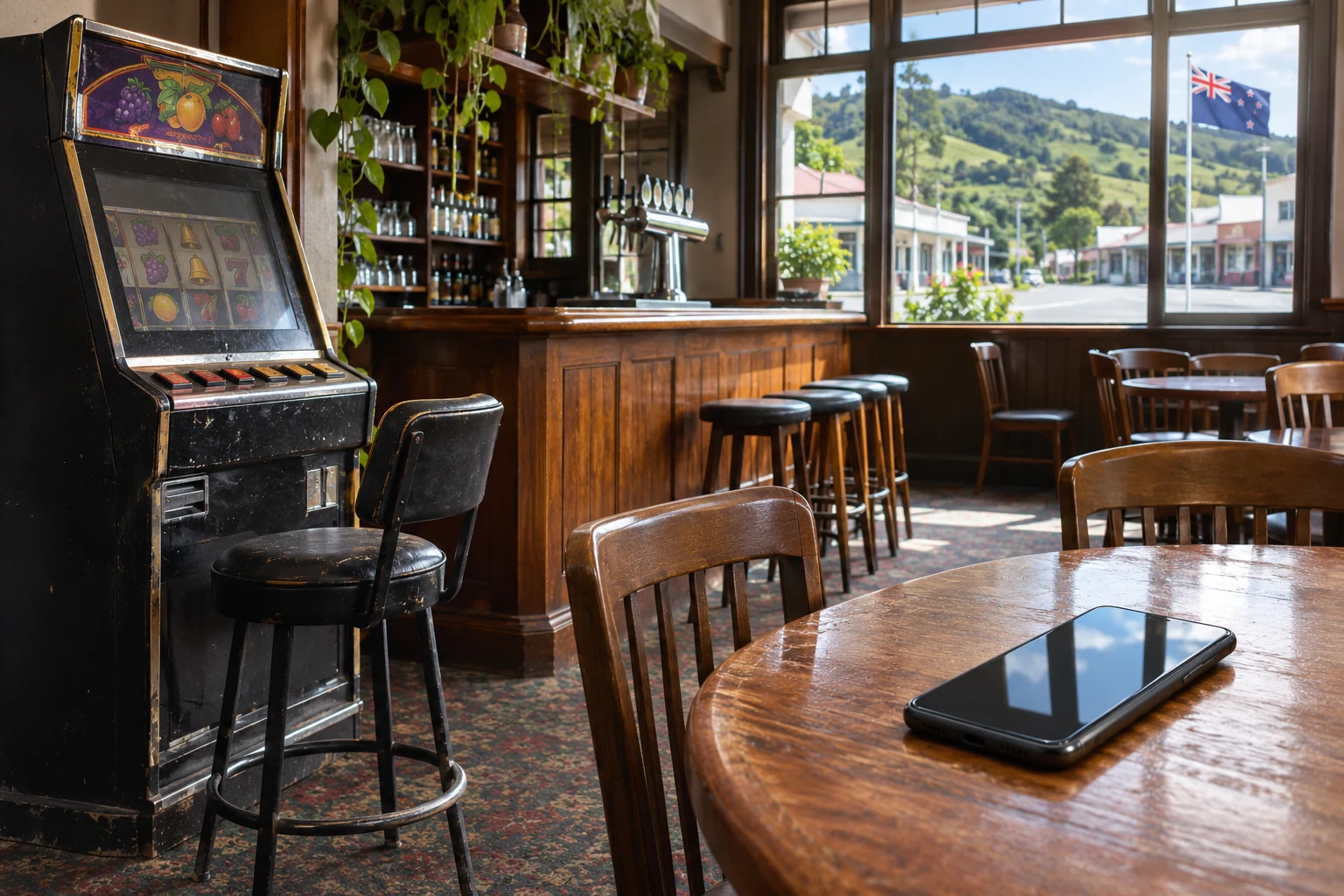

Press Spin on an online slot and the reels start moving. The result is normally settled by the game's software before those reels finish their animation. A random number generator selects an outcome; a mathematical model assigns symbols and prizes; the screen turns that calculation into a game.
In New Zealand, these games are also called online pokies. Their bright symbols, free spins and jackpots can hide a fairly precise arrangement of probabilities. The useful questions are not whether a machine is feeling lucky, but how its odds are built, where the house edge comes from, and which details a player can actually verify.
What happens between pressing Spin and receiving a payout?
- The stake is recorded. The game takes the total bet for the round, using the selected coin value, betting level or line configuration where those settings exist.
- The random number generator (RNG) supplies values. The game uses those values to select reel stops, symbol positions or another outcome defined by its rules.
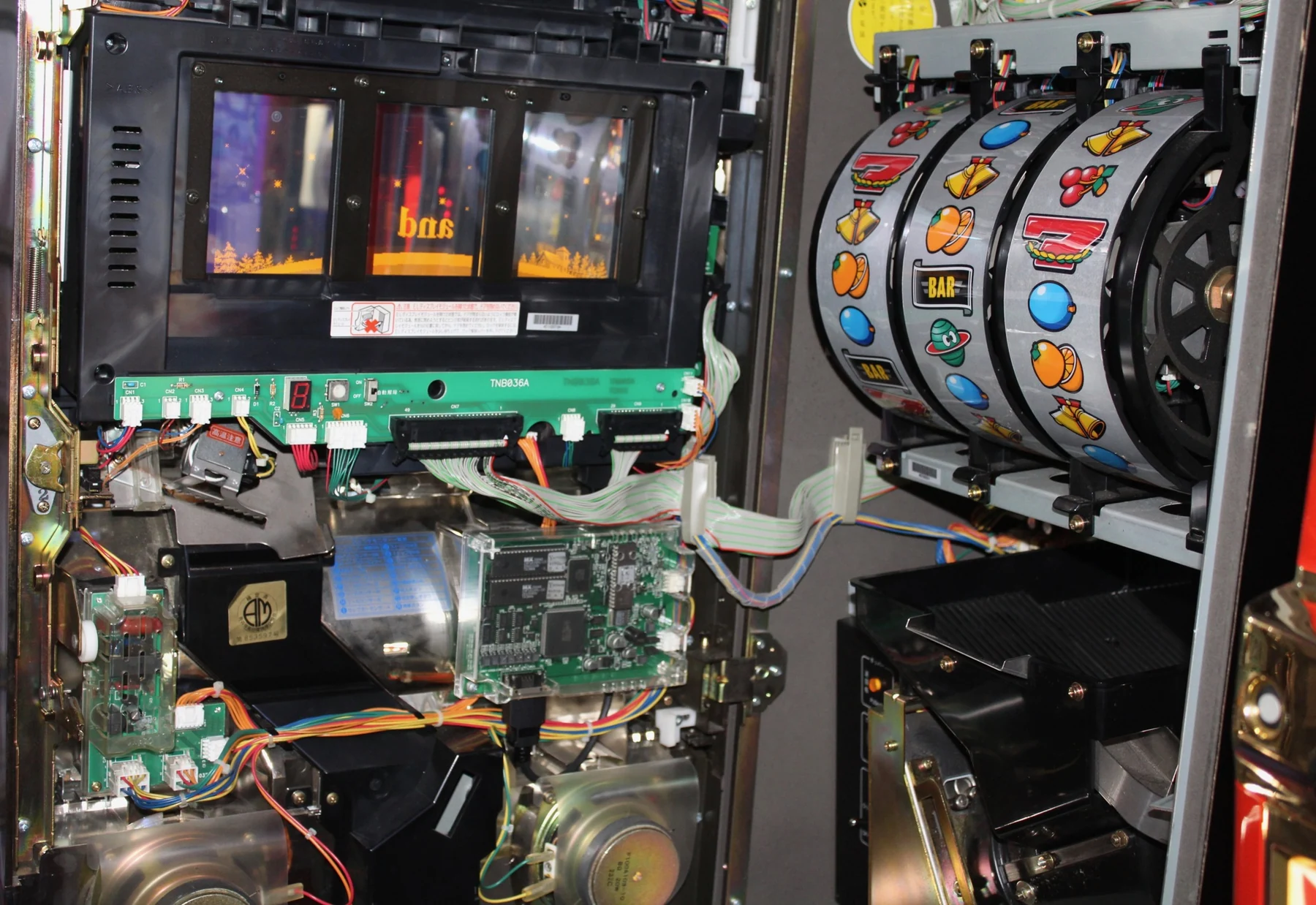
- The game engine maps the values. Virtual reel strips and symbol weights determine which images appear in the grid. Some games use a different mathematical structure, such as a cluster grid.
- The paytable evaluates the result. Winning paylines, ways to win, scatter awards and any triggered features are assessed according to the game's rules.
- The balance is updated. A payout is credited if the outcome qualifies. A bonus feature may instead lead into further rounds with their own rules.
- The reels display the outcome. Animation, music and celebrations make the result visible; they do not create a new chance after the initial selection.
The game provider designs the software and its mathematics. The online casino operator delivers the game through a website or app and handles the customer account. The random result may be resolved on a provider-controlled system or elsewhere within the approved game architecture. A phone or browser is principally the interface, not a device that can steer the random numbers.
RNGs, virtual reels and the odds you cannot see
Random does not mean every symbol is equally likely
Most online slots rely on a software-based pseudo-random number generator (PRNG). Its output follows an algorithm, but a properly implemented, securely seeded generator produces results that cannot feasibly be predicted by observing earlier spins. New Zealand's 2026 technical standards require cryptographically secure software PRNGs, appropriate statistical properties and unbiased mapping to the game's intended probabilities.
The RNG's output is only one layer. A virtual reel strip can contain a common low-paying symbol many times and a rare high-paying symbol only once. Even if every position on that strip is chosen fairly, the symbols on the screen do not all have the same chance of appearing. That deliberate symbol weighting helps set the game's hit frequency, top-prize odds, volatility and theoretical return.
Consider a simplified three-reel game with ten equally selectable stops on each reel. Suppose a special symbol occupies two stops on reel one, one on reel two and one on reel three. The chance of that symbol landing on all three reels at once is:
(2/10) × (1/10) × (1/10) = 1/500, or 0.2% per spin.
If that exact combination paid 100 times the total stake, it would contribute 20 percentage points to the game's theoretical RTP: a 1-in-500 event multiplied by a 100-times return. Every other winning combination and bonus feature adds its own contribution. Real video slots use substantially more elaborate reel sets, feature states and payout rules, so the visible grid alone cannot reveal the true probability of a jackpot.

Reels, paylines, ways to win and cluster pays
Traditional three-reel games often use familiar fruit, BAR, bell and seven symbols. Many modern video pokies use a five-reel, three-row grid, though variable-height reels and other layouts are common. The paytable describes which symbols pay, how combinations are counted and whether the stake shown is per line or for the whole spin.
- Fixed or selectable paylines: matching symbols must land on specified patterns, frequently from left to right. More active lines can create more possible paying combinations, while the total stake can rise as well.
- Ways to win: matching symbols across consecutive reels may pay without following a fixed line. A 243-ways game on a five-by-three layout has 3 × 3 × 3 × 3 × 3 potential symbol-position paths, though the actual award depends on the game's rules.
- Cluster pays: adjoining symbols form paying groups, rather than traditional lines. Games may set a minimum cluster size.
- Variable reels and Megaways: reel heights can change between spins, producing a changing number of possible ways. More ways are not automatically better odds or a higher RTP.
A larger number of paylines or ways can increase the frequency of some displayed wins without making the game profitable. A payline win worth NZ$0.40 on a NZ$1 total stake is still a NZ$0.60 net loss on that round.
Volatility, hit frequency and max win
Volatility (also called variance in casual slot descriptions) concerns how unevenly payouts are distributed. Low-volatility games tend to deliver smaller returns more often. High-volatility games can have long gaps between meaningful prizes and concentrate more of their total return in rare, larger results. Two pokies can share a 96% RTP and still feel completely different during the same number of spins.
Hit frequency counts how often a qualifying paying result appears. It does not say whether the win exceeds the stake. A game could show a high hit frequency yet return many NZ$0.20 or NZ$0.60 prizes on NZ$1 bets. Bonus frequency is narrower: it estimates how often a particular free-spin or feature trigger occurs. Maximum win expresses a ceiling, often as a multiple such as 5,000× the bet, without revealing how remote that outcome is.
Volatility labels are not a universal measurement scale across every provider. A 'high' rating from one studio is not a precise numerical comparison with another studio's 'high'. Where the game rules supply a mathematical description or feature odds, those details are more informative than the label alone.
How wilds, scatters, free spins and jackpots fit into the maths
Bonus mechanics change the route to a payout, not the fact that outcomes are governed by predetermined rules and probabilities.
- Wild symbols
- They substitute for specified ordinary symbols on qualifying combinations. Expanding, sticky or multiplier wilds add rules that can increase the value of certain outcomes.
- Scatter symbols
- They may pay anywhere on the screen or trigger free spins, often without following a payline. Trigger counts and positions are game-specific.
- Free spins and retriggers
- A feature awards further spins without a separate ordinary stake on each awarded spin. Enhanced multipliers, special reels or extra wilds can apply. The cost of funding those awards is built into the game's complete mathematical design; 'free' is not the same as risk-free.
- Cascading or tumbling reels
- Paying symbols disappear and replacements drop into place, potentially creating multiple evaluations from one paid round. The sequence follows the game's feature rules.
- Respin and Hold & Win features
- Selected symbols remain in place while other positions are redrawn. New qualifying symbols may reset the remaining respins, creating a clearly defined feature state.
- Multipliers and bonus buys
- Multipliers increase selected payouts. Where offered, a bonus buy charges a stated price to access a feature directly; it can use a different RTP or probability model from ordinary play and may be restricted under relevant platform rules.
- Progressive jackpots
- A portion of qualifying wagers can feed a growing prize pool. A local progressive draws from a limited game or platform, while a network progressive can link eligible games or platforms. Jackpot eligibility, contribution rules, reset values and trigger conditions require separate attention.
For many bonus-heavy games, part of the advertised RTP is tied to infrequent features or a jackpot. Someone who never triggers that feature will not receive a proportional share of its theoretical value during their session. The RTP still describes the complete game model, not just ordinary line wins.
Why a slot can feel responsive
Near-miss animations, celebratory sounds and bonus cues can make an outcome feel personal, but they do not reveal what the next result will be. For how those cues affect perception, see the casino psychology article.
Can an online casino change the odds or control a winning streak?
A game can be offered in different fixed RTP versions; that differs from changing a player's odds after a win or withdrawal. New Zealand's 2026 minimum standards prohibit compensated play and require secure RNGs, preserved probability distributions and controls against altering a selected outcome. Those rules apply to covered operators, not every site accessible from NZ.
Testing labs such as GLI, eCOGRA, BMM and iTech Labs can assess a defined game build, its RNG and payout model. A certificate is not proof of the operator's NZ legal status. Provably fair systems let a recorded result be checked from revealed seeds and a nonce, but do not show that RTP is favourable or consumer protections are in place.
New Zealand rules for online casino operators
The legal status of an online casino depends on its operator and current authorisation, not its app, currency or game selection. See the New Zealand gambling law guide for the transition and licensing rules.
What the game information screen can actually tell you
A practical reading of a pokie's rules starts with six details: total bet per spin, RTP, volatility, paytable, feature conditions and maximum win. The in-game information panel can also clarify whether an advertised jackpot requires a qualifying stake, whether bonus purchases have separate mathematics, and how many lines or ways are active.
The displayed RTP may belong to a particular version, not every release of the same title. A demo or free-to-play mode is useful for learning the controls but cannot establish the return of the paid version; New Zealand's minimum standards require disclosure if an equivalent free and paid game has different odds or RTP. A game history and account transaction record provide a better record of money actually wagered and paid than the animation on the reels.
If an internet connection drops during a spin, an interruption should not be treated as proof of either a win or a loss. The operator needs a record of the round and a way to resolve it under the applicable rules. New Zealand's technical standards require recovery procedures and, when a game cannot be continued after an interruption, payment of winnings achieved up to that point or return of the bet ? whichever is better for the customer.
The mathematical trade-off remains after every check: a lower house edge can reduce expected cost per dollar wagered, but it cannot remove variance or guarantee a winning session. A spending limit changes how much can be lost; it does not change the RNG.
Questions that reveal the mechanics
Do online slots pay better at night or after a long run of losses?
No timing rule or losing streak makes an separate spin more likely to win. The relevant probabilities come from the approved game configuration and its feature rules, not the clock or the player's history.
Does pressing Stop change where the reels land?
On an ordinary RNG slot, a Stop or quick-spin function changes the presentation or duration of the animation. It does not let the player choose a more favourable reel stop. Availability of speed-related features also depends on local rules.
Does 96% RTP mean a 96% chance of winning a spin?
No. RTP concerns the total value of prizes relative to all stakes over the long run. A game's hit frequency describes how often a paying result appears; neither number by itself tells you the odds of receiving more than your stake on the next spin.
Do mobile pokies and desktop slots have different odds?
The same approved mathematical version should give the same probabilities across devices. Screen size, animation speed and connection stability affect the experience, not the underlying selection probabilities. Different game versions or bet modes can have different configurations and need to be checked separately.
Is a big progressive jackpot guaranteed to fall soon?
Not simply because the prize has grown. The jackpot rules determine eligibility and triggering. A specifically designated must-hit-by prize has different conditions from an open-ended progressive; its published limits and mechanism matter more than the displayed amount.
Are online pokies the same as the machines in a New Zealand pub?
Both can use RNGs, virtual reels and paytables, but they are not interchangeable products. Cabinet hardware, game features, available payout configurations and regulatory requirements differ. A return percentage stated for a venue machine cannot be transferred to an online game with a similar name.
Random outcomes do not cancel the house edge. The more money repeatedly wagered, the more exposure there is to that mathematical disadvantage. For confidential gambling support in Aotearoa New Zealand, Safer Gambling Aotearoa lists the free 24/7 Gambling Helpline on 0800 654 655 and free text support on 8006 .