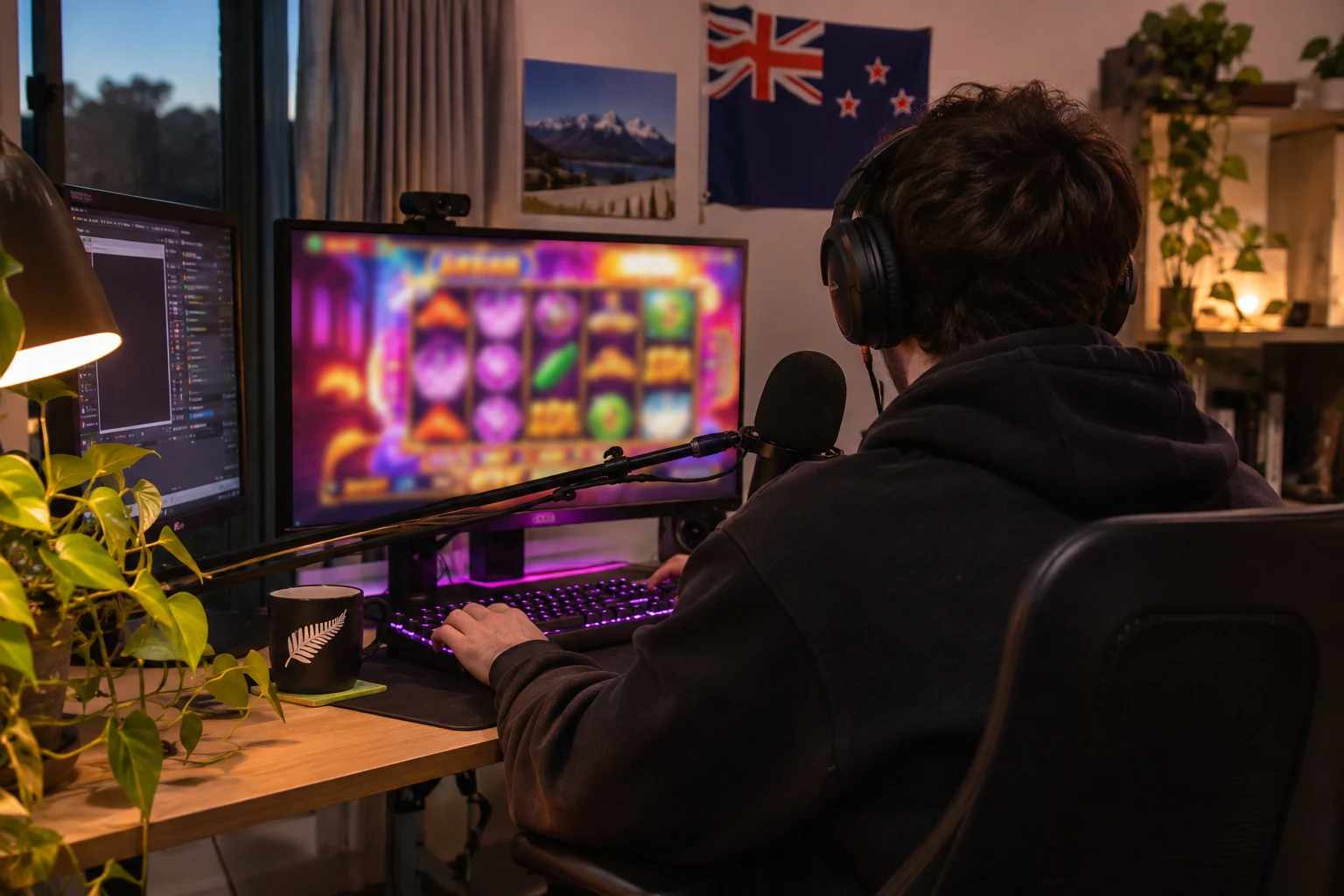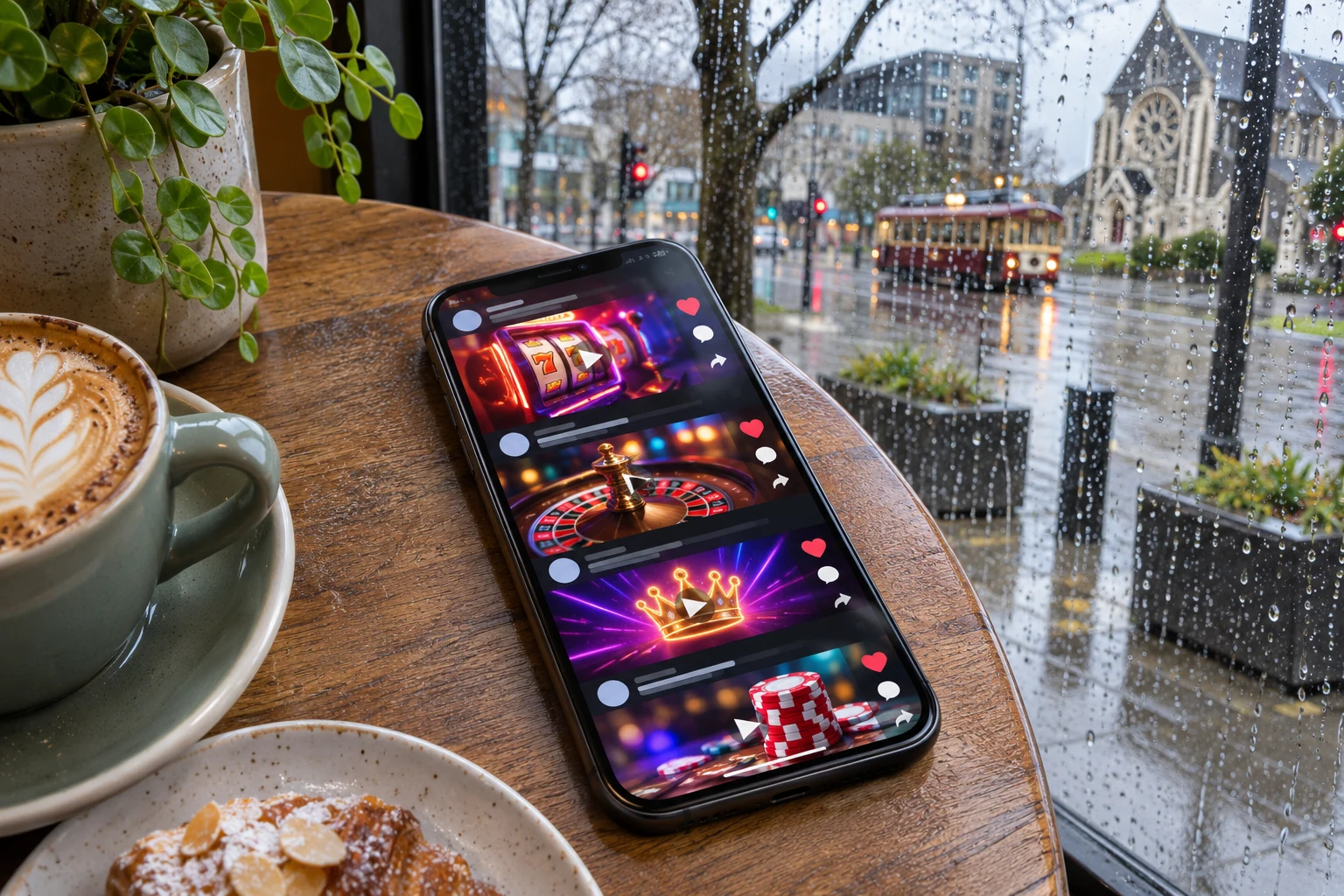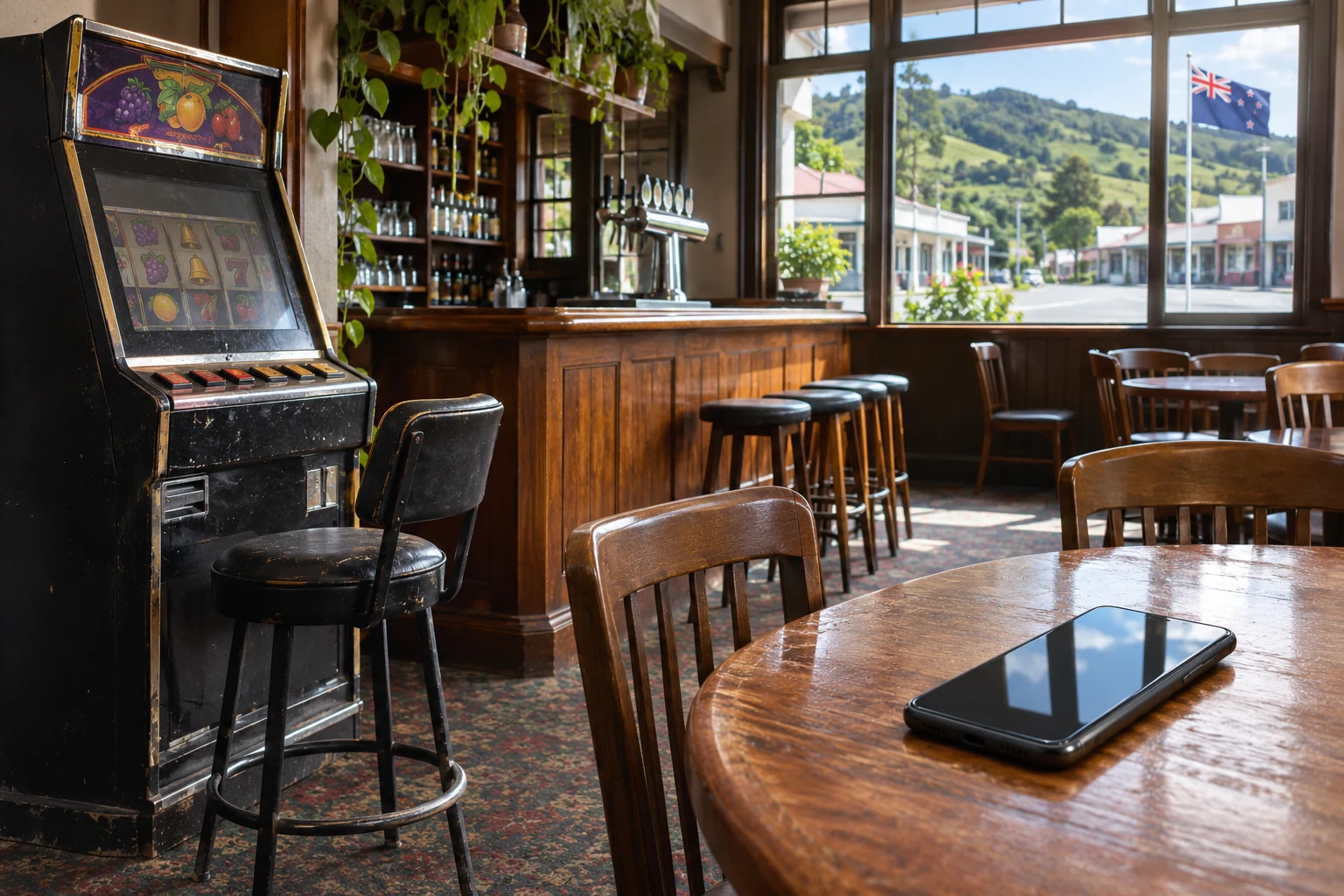

A casino logo before a YouTube video. Pokies clips on Instagram. A gambling billboard on the motorway. Seeing an ad in New Zealand does not mean the operator is allowed to run it. The country is moving towards licensed online casinos, but the advertising rules have not caught up with every promotion appearing in Kiwi feeds.
As at 3 November 2026, advertising online casino gambling to people in New Zealand remains prohibited. The Online Casino Gambling Act 2026 took effect on 1 May. Winning the right to apply for a licence, though, is not a licence. The Department of Internal Affairs (DIA) expects licences to be issued in 2027. Celebrity endorsements, affiliate links and free-play promotions still fall under scrutiny.
Why New Zealand's casino advertising rules are changing
The Gambling Act 2003 restricted advertising by overseas gambling operators. Offshore sites nevertheless reached New Zealand audiences through international ad networks, changing social accounts and algorithm-driven placements. Enforcement often began after people had already seen a campaign.
The Online Casino Gambling Act 2026 creates a New Zealand licensing pathway, with consumer protection and harm prevention built into the regime. It does not give offshore casinos an immediate right to advertise. The DIA's guidance for advertisers covers influencers, content creators and businesses that publish or arrange promotions.
The transition has three relevant dates:
- 1 May 2026: the new Act took effect, including stronger powers against unlawful online casino advertising.
- 1 December 2026: operators that have not made a qualifying licence application must stop providing online casino gambling in New Zealand; applicants awaiting a decision may continue operating under transitional provisions, without advertising.
- 2027: the licensed market is expected to become operational, with advertising available only to approved operators and only within the new rules.
A casino site being accessible from New Zealand is not evidence that its advertising is legal here. Operating, applying for a licence and receiving permission to advertise are separate matters.
Why casino ads still turn up in Kiwi feeds
An overseas agency can buy a campaign that later appears in a New Zealand feed. A creator can repost it; an ad network can serve it without a local publisher choosing the audience. Casino promotions also move through search results, display banners, livestreams, podcasts and short videos.
Being based offshore offers no automatic protection. The 2026 Act can reach advertising published overseas when it comes to the attention of someone in New Zealand. The DIA can issue takedown notices and pursue pecuniary penalties of up to NZ$5 million for unlawful advertising. The rules also reach those who arrange or publish ads, not only casino operators.

Some campaigns build brand recognition without asking viewers to deposit money. They repeat a casino name, borrow pokies imagery or promote a free-play address linked in the public mind with real-money gambling. No deposit button is needed for an advertisement to have a promotional effect. The Advertising Standards Authority (ASA) has confronted that distinction in complaints about free-play casino brands.
A physical casino, Lotto NZ, TAB sports betting and an online slots operator do not all fall under identical rules. The ASA Gambling Advertising Code applies general standards; the Online Casino Gambling Act adds restrictions for online casino services. One type of gambling ad appearing legally does not authorise another.

The campaigns that shaped the casino advertising debate
22Bet, McCullum and offshore ads
In April 2023, 1News reported YouTube advertisements in which former Black Caps captain and England cricket coach Brendon McCullum promoted offshore betting brand 22Bet. The Problem Gambling Foundation criticised the campaign. Google removed ads that breached its platform policies; more 22Bet ads appeared later and were also removed.
McCullum's familiarity to Kiwi cricket fans did not establish that 22Bet was authorised to advertise locally. The removals exposed another gap: New Zealand gambling law and YouTube's advertising policies are separate enforcement systems.
In March 2025, RNZ reporting carried by the NZ Herald covered DIA action over influencers promoting offshore casinos through livestreams, giveaways and links. DIA gambling regulator Vicki Scott warned creators that a large social following was no exemption. The 2026 Act subsequently strengthened the DIA's takedown and financial-penalty powers.
JackpotCity: when 'free to play' still builds a casino brand
In 2024, Lotto NZ complained to the ASA about JackpotCity.net advertisements on television, radio, billboards and the site itself. The panel upheld parts of the complaint: the free-play website and associated broadcasts could mislead consumers. The 2024 JackpotCity decision addressed the link between that domain and the wider Jackpot City brand.
The web address was only part of the picture. Repeated colours, casino imagery and a familiar brand name can promote a real-money gambling identity while directing viewers to free games.
Wildz: a television ad that crossed the free-play line
The ASA upheld complaints in May 2024 about a television commercial for Wildz.net, presented as free to play. It found the ad misleading because it promoted the wider Wildz gambling brand. Casino visuals and music did not make that connection disappear. The Wildz decision, complaint 24/068 followed the earlier JackpotCity dispute.
Both decisions predate the 2026 Act. They show why a complaint body looks at what viewers take from an ad, rather than accepting the advertiser's description of a free-play product.
Betcha, TAB and the influencer economy
Betcha, developed under the TAB - Entain sports betting partnership, used a lifestyle-led advertising style. The Spinoff covered Instagram Reels, paid partnerships, podcasts and event promotions featuring sport alongside fashion, humour and social life. The report named Katey Martin, Courtney Tairi, Boys Get Paid and The Group Chat.
Betcha concerns sports betting, not a lawful model for online casino influencer marketing. The Racing Industry Act 2020 and TAB-related rules differ from online casino legislation. The campaign is relevant because lifestyle content can carry a paid gambling message without looking like a conventional betting ad.
That concern extends to university audiences. In 2025, Salient described gambling clips and betting promotions circulating around student social feeds. An R18 label does not tell us who actually sees a reposted clip.
What the 2027 licensing system will - and will not - allow
According to the DIA's October 2026 update, 11 entities won the right to apply for 15 online casino licences. The auction drew 32 bidders across 10 rounds and reached NZ$15 million per licence. None of those auction results grants an immediate right to advertise: suitability and compliance checks still follow.
Successful entities included two SkyCity NZ Online companies, Stake New Zealand Limited, TAB New Zealand, Skill On Net Limited, Baytree Interactive Limited, Christchurch Online NZ Limited, One Casino Limited, Playvia Gaming (NZ) Limited, Rock Swift Group Limited and Rush Entertainment Limited. A corporate applicant is not necessarily the consumer brand that will appear in future ads. The DIA plans a public register of issued licences.
After licensing, the Online Casino Gambling Regulations 2026 permit specified channels, including search, social media, on-demand video, print and some outdoor advertising. Channel access is only the first test. The creative, target audience, placement and commercial arrangement must comply too.
Promotion methods with hard boundaries
The restrictions go beyond where an ad appears. Licensed casinos must not use gaming-machine images or sounds, poker chips, slot jackpots or extraordinary-prize appeals. Ads must not portray drinking alcohol, promote gambling as an investment or financial escape, suggest higher social status, distort winning chances, appeal to superstition or pressure people to keep playing.
Viewers must be able to recognise an advertisement for online casino gambling. Hiding that identification behind a click is not enough. Rules also restrict using a person's gambling-behaviour data to encourage bigger stakes or faster play.
Why the under-25 rules deserve closer attention
People must be 18 to gamble at an online casino, but advertising faces additional youth protections. Under Regulation 44, an ad cannot be placed where more than 20% of its likely audience is under 18 or where it is likely to appeal to minors. Targeting 18-to-25-year-olds is restricted unless reasonable steps prevent under-18 exposure. The creative must not show anyone who is, or appears to be, under 25 taking part in online casino gambling.
An account's 18+ setting is not enough on its own. The rules separately test the likely audience, targeting, subject matter and apparent ages on screen. That distinction matters on Instagram, TikTok and YouTube, where followers are not the only people who see shared clips.
Casino news, sponsorships and affiliate links
Naming a casino in news coverage does not automatically turn the report into an ad. Reporting on an ASA ruling or licence auction is different from material a gambling brand pays to distribute, controls or uses to recruit customers.
Sponsored content, advertorial, brand partnership, affiliate marketing and ambassador are commercial labels, not interchangeable editorial roles. A comparison site paid for depositing referrals is not operating like a newspaper covering a complaint. The licensed online casino rules prohibit affiliate arrangements and personal endorsements. Calling a paid referral 'editorial' changes nothing about the payment.
Publishers, podcast hosts, creators and agencies can be involved in the advertising chain. The DIA's guidance covers people who publish or arrange to publish unlawful promotions, even when they do not own the casino.
How to assess an online casino promotion in New Zealand
A familiar logo or a polished video does not show who paid for the placement. Check the gambling product and the sponsor. Once licences are granted, the DIA register will resolve the operator’s licensing status.
- Identify what is actually promoted. Is it a physical casino, Lotto NZ, TAB sports betting, a free-play gambling brand or real-money online casino games such as slots, roulette and blackjack?
- Look for the commercial relationship. A referral code, tracked link, giveaway, paid partnership or repeated brand endorsement is more informative than a claim that the post is 'just entertainment'.
- Check the jurisdiction and timing. A foreign licence or an appearance in Google search results does not confer a New Zealand online casino licence. During the 2026 transition, an auction applicant has no automatic advertising permission.
- Check the presentation. Promises of effortless income, jackpot-led slot advertising, urgency, disguised sponsorship and underage-looking participants are serious warning signs against the incoming regime.
- Use the right complaints route. For online casino advertising during the transition, the DIA lists onlinegambling@dia.govt.nz . The ASA handles complaints about advertising standards, including misleading or socially irresponsible gambling promotions, within its jurisdiction.
Keep the ad's URL, a screenshot, the publisher's name, the date and any referral destination. Those details help regulators identify the original campaign rather than a later repost. A complaint is a request for assessment, not proof that the advertiser broke the law.
Where to get support
Casino promotions can show a possible win without showing all deposits, losses or who paid for a clip. If gambling content is causing concern, free confidential support is available from Gambling Helpline on 0800 654 655 or by text to 8006.
Questions New Zealanders ask about casino advertising
Is online casino advertising legal in New Zealand right now?
No, not for unlicensed online casino operators targeting New Zealanders. As at 3 November 2026, the DIA says the prohibition remains in force. The licensing process has not yet made online casino advertising generally lawful.
Will online casinos be able to advertise on Google, Facebook or television in 2027?
Licensed casinos are expected to gain access to some digital and broadcast advertising methods under the 2026 regulations, subject to rules on audience, timing, format and content. Google, Meta and other platforms have separate advertising policies.
Can an influencer promote an online casino by calling it a review?
No. Calling a paid endorsement a 'review' does not remove the commercial relationship. The new rules prohibit personal endorsements and affiliate arrangements for licensed casino ads. During the transition, the advertising ban still applies to offshore casino promotions reaching New Zealand.
Why can I see a gambling ad if casino ads are banned?
It may be an ad for Lotto NZ, TAB betting or a land-based casino rather than an online casino. An overseas campaign may also reach New Zealand through a platform despite the restrictions. Seeing the ad is not evidence that the promotion complies with local law.
Does the casino licensing auction mean the winning brands are approved?
No. The September - October 2026 auction awarded the right to apply for a licence. The DIA must assess each application, issue licences and publish the register before operators can rely on the new advertising permissions.
The DIA's licence register will eventually identify which online casino operators hold approval. It will not make a hidden paid endorsement acceptable, or turn an ad directed at minors into a lawful placement. A brand appearing in the news is different again: the payment and purpose behind the message matter.