
On a casino banner, “100% match” tends to be much larger than the withdrawal terms. The advertised figure describes a promotion, not cash waiting in an account. How much can actually be withdrawn depends on what the operator calls bonus funds, what happens after a win and which rules apply.
For how promotions circulate through social feeds, see the social media article.
New Zealand makes that distinction especially important. The Online Casino Gambling Act 2026 is changing a market long served by offshore websites. A bonus explainer written for the old market may describe terms that have no place in the forthcoming licensed system.
Why the headline bonus is not its cash value
Take a hypothetical 100% deposit match. Someone deposits NZ$100 and receives NZ$100 in promotional credit, leaving NZ$200 on the account screen. That number can conceal two different balances: NZ$100 of the customer's own money and NZ$100 restricted by bonus terms. Older offshore offers have also treated the deposit and bonus together as subject to playthrough rules.
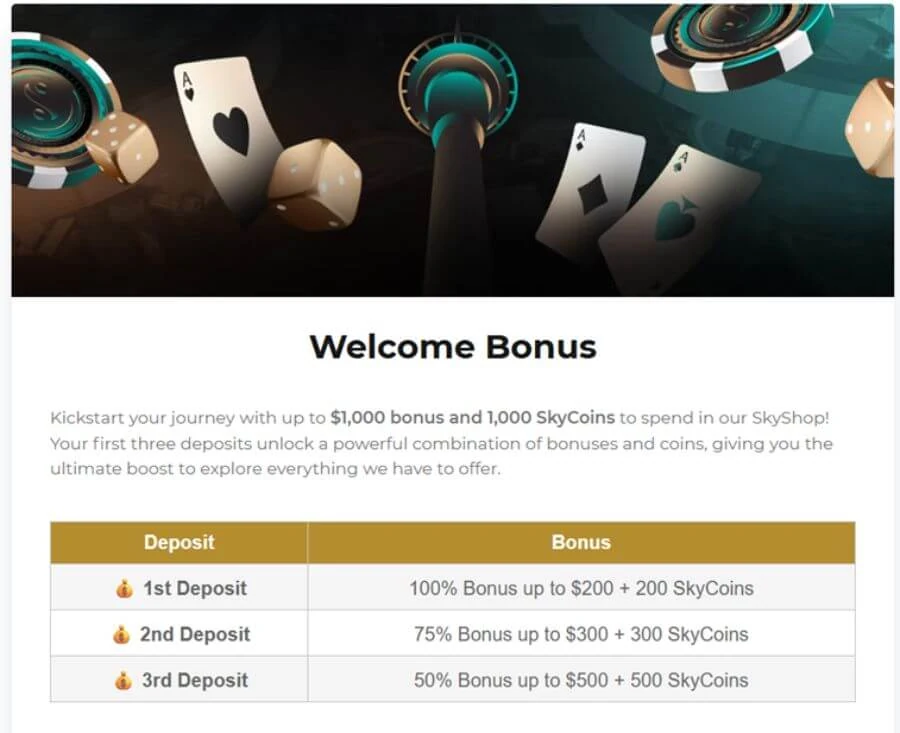
“Up to NZ$1,000” is a ceiling, not an automatic NZ$1,000 award. Reaching it might require a large deposit or several deposits within a welcome package. Payment-method restrictions, a bonus code, an opt-in step and a claim deadline can all affect eligibility. Creating an account does not, by itself, secure the advertised amount.
The balance labelled “bonus” is not necessarily the balance available for withdrawal. Cash, promotional credit and winnings from free spins can be recorded differently. A single large figure on the cashier screen may obscure those distinctions until somebody attempts to cash out.
The wagering requirement: a multiplier with a real cost
A Wagering requirement - also called rollover or playthrough - measures qualifying bets made under a traditional promotion. With 35× wagering, the customer does not have to lose the bonus 35 times. The operator counts stakes placed over successive rounds, including money won and staked again. What matters is whether 35× applies to the bonus alone or to the deposit plus bonus.
| Promotional condition | Calculation | Qualifying turnover |
|---|---|---|
| NZ$100 bonus, 35× bonus only | NZ$100 × 35 | NZ$3,500 |
| NZ$100 deposit + NZ$100 bonus, 35× combined | NZ$200 × 35 | NZ$7,000 |
| NZ$20 in free-spin winnings, 30× winnings | NZ$20 × 30 | NZ$600 |
Two promotions offering the same NZ$100 match can require NZ$3,500 and NZ$7,000 in qualifying bets. Neither figure is a required deposit: turnover counts repeated stakes. Still, the customer has to keep enough money in play to reach the target. A losing run can exhaust the balance first.
Game contribution can make an already demanding condition harder to clear. Under older terms, pokies might contribute 100%, while blackjack, roulette or live-dealer games count for 10% or not at all. At 10%, a NZ$100 stake clears only NZ$10 of the requirement; reaching NZ$3,500 of credited turnover would involve NZ$35,000 in actual stakes. Some progressive-jackpot pokies are excluded despite other slots qualifying.
These are examples of offshore-style bonus maths, not the rules for future New Zealand-licensed casinos. The 2026 regulations treat the withdrawal of winnings from an inducement differently.

Bonus money does not remove the house edge
RTP describes a game's expected return over many wagers, not one session. At a hypothetical 96% RTP, the 4% house edge applied to NZ$3,500 of turnover gives an expected loss of NZ$140 (NZ$3,500 × 4%). This is not an upfront fee or a guaranteed individual loss; a balance may run out before the wagering target is met.
Volatility describes how payouts are distributed, while versions of the same game can have different RTPs. A win clip does not show the odds a viewer would face. Raising the stake does not remove the house edge; it puts more money at risk while the requirement remains unfinished.
What the different bonus labels actually mean
| Bonus format | What the marketing highlights | What determines the value |
|---|---|---|
| Welcome or first-deposit bonus | A percentage match or multi-deposit package | Deposit threshold, capped award, bonus balance status and withdrawal terms |
| No-deposit bonus | Credit without an initial payment | Identity checks, eligibility, winnings limits and any subsequent deposit condition |
| Free spins | A large number of supposedly free rounds | Stake per spin, eligible pokie, expiry and treatment of winnings |
| Reload bonus | Another match for an existing customer | New spending required, repeat conditions and eligibility |
| Cashback | A percentage of losses returned | Definition of net losses, settlement period, caps and whether the return is cash or credit |
| VIP or loyalty rewards | Points, tiers and personalised perks | Spending needed to qualify, redemption rules and incentives to keep playing |
Fifty free spins at NZ$0.10 each represent NZ$5 in total spin stakes. They do not equal NZ$50 in cash. The spins may work on only one pokie, expire after a short period and credit any winnings to a restricted balance. The number “50” says very little until the stake and the treatment of winnings are known.
A headline promising “10% cashback” may mean 10% of qualifying net losses over a set period, with a cap. It need not mean a refund of 10% of every wager. Restricted bonus credit is not the same as withdrawable cashback. VIP points and loyalty tiers raise a different issue: qualifying for the reward can require extra gambling and therefore extra exposure to the house edge.
The small print that decides whether money can be withdrawn
Maximum bets, excluded games and restricted play
An older bonus agreement might impose a NZ$5 maximum wager while promotional funds are active. That limit is a rule, not advice about stake size. A single bet above it may void winnings under some terms. Lists of excluded pokies, table games, live-dealer titles or progressive jackpots are equally consequential. Vague references to “bonus abuse” can become contentious when a customer requests payment.
Maximum cashout and bonus balance rules
A maximum cashout clause may leave somebody with NZ$400 in bonus winnings but a payout limit of NZ$100. Older offers also distinguished a sticky bonus, which could not itself be withdrawn, from a non-sticky bonus that kept deposited funds separate. The labels are used inconsistently. The account's actual cash and bonus rules govern what can leave it.
Expiry, activation and payment exclusions
Activation and wagering deadlines are not always the same. Free spins might expire within days, while winnings from those spins carry a second deadline. An e-wallet, bank transfer or card accepted for deposits may still be ineligible for the promotion. Currency conversion, transaction fees and withdrawal-processing time affect what eventually arrives.
Verification and withheld withdrawals
Know-your-customer (KYC) checks can involve identity, age, address and proof of payment ownership. They are separate from bonus conditions. A delayed payout may stem from missing documents, an unsettled promotion, a payment review or an alleged breach of rules. In a dispute, the exact offer terms, account history, transactions and messages matter far more than a screenshot of the banner.
What changed for casino bonuses in New Zealand in 2026?
As at 3 November 2026, New Zealand's online-casino licensing system is still in transition. The Department of Internal Affairs (DIA) says the Online Casino Gambling Act took effect on 1 May 2026, with licences expected from early 2027. Providers serving New Zealand customers before 1 May can continue under transitional conditions until 1 December 2026. Up to 15 successful auction participants may then continue while their applications are assessed, under the department's published plan.
Online-casino advertising to New Zealanders is prohibited during the transition. Displaying NZ dollars or using the words “Kiwi casino” does not make a site locally licensed. Nor does a Malta, Curaçao or other overseas credential. The DIA says the licensed regime will have a public register and a registration icon identifying authorised providers.
The new inducement rules change the older bonus equation
The Online Casino Gambling Regulations 2026 set out conditions for inducements under the new system:
- An inducement that does not require spending the customer's own uncommitted funds must not exceed NZ$100 in value.
- When the customer must spend their own funds, the inducement is capped at the lower of NZ$100 or 200% of the original deposit or bet, per deposit or bet.
- After a win resulting from an inducement, the operator must allow the winnings to be withdrawn without requiring those winnings to be gambled again.
- Customers must have at least 60 days to fulfil the conditions for a payout from an inducement, and must be told both the conditions and whether they are using bonus funds or their own uncommitted money.
Those requirements belong to the regulated system. They do not turn an offshore promotion visible in November 2026 into a New Zealand-licensed offer. An old “NZ$2,000 bonus with 50× wagering” headline should not be taken as an example of what a licensed operator will be allowed to advertise or require.
The regulations also address credit-based payment methods, identity checks, complaints and safer-gambling controls. Casino gaming is regulated separately from online racing and sports betting involving TAB NZ. A sports free bet is not subject to the same framework as casino free spins.
What separates a meaningful offer from a misleading one?
Only the withdrawable amount makes two offers financially comparable. A NZ$100 headline says nothing about a cashout cap or whether the money is promotional credit rather than cash.
Check what has to be paid or risked: a deposit, qualifying bets or fees. Then examine what happens to winnings - caps, verification and access to withdrawals. Finally, who is accountable for the terms? A local-looking address, a regulator named in the footer and an affiliate review are no substitute for New Zealand authorisation and a usable complaints process.
“No wagering” removes one familiar obstacle but not necessarily the others. Identity checks, geographic eligibility, cashout limits and restrictions on promotional winnings can still apply. Even generous-looking terms cannot remove the house edge or make casino gambling a reliable income stream.
Common questions behind the bonus claims
Are no-deposit casino bonuses genuinely free?
Not necessarily. A no-deposit promotion may supply credit without an upfront payment, yet offshore terms can still restrict withdrawals through KYC checks, turnover rules, cashout limits or a later deposit requirement. A promotional banner does not establish that the offer is lawful or available in New Zealand.
What happens to an unfinished bonus when a withdrawal is requested?
Under some older offshore agreements, requesting a withdrawal cancels unused bonus credit. Whether the customer's deposit remains accessible depends on how the funds were separated and on the agreed terms. Finishing the wagering counter alone does not complete identity and withdrawal checks.
Can a casino confiscate winnings for alleged bonus abuse?
Offshore operators may prohibit duplicate accounts, collusion, particular betting patterns or bets above the bonus maximum. They can invoke those clauses to refuse a payout. That does not make an accusation of “bonus abuse” conclusive; the written rule, the account record and the complaints route still need scrutiny. The future New Zealand-licensed regime offers a different route to redress from an offshore provider.
Does a foreign casino licence provide New Zealand complaint rights?
No. A foreign licence may give access to a foreign regulator's procedures, but it does not create a DIA licence. New Zealand's regime provides a domestic complaints route for customers of licensed operators. A .nz domain, an NZ$ balance or local payment options do not confer those rights.
The cost that never appears in a bonus banner
A bonus can cost more through the gambling it encourages than through any stated condition. Expiring free spins and loyalty tiers close to renewal give previously spent money the appearance of something still recoverable. It is not. Continuing to bet cannot undo losses, and letting a promotion expire is not a debt to be made good.
People affected by gambling harm in New Zealand can contact Safer Gambling Aotearoa or the Gambling Helpline on 0800 654 655; text support is available on 8006. Deposit limits, time limits, breaks and self-exclusion are more useful safeguards than any promise printed on a bonus banner.
A casino bonus cannot be judged by the number on its banner. For New Zealand readers, there is a further distinction: an offshore promotion seen online does not come with the withdrawal protections required of a locally licensed operator.