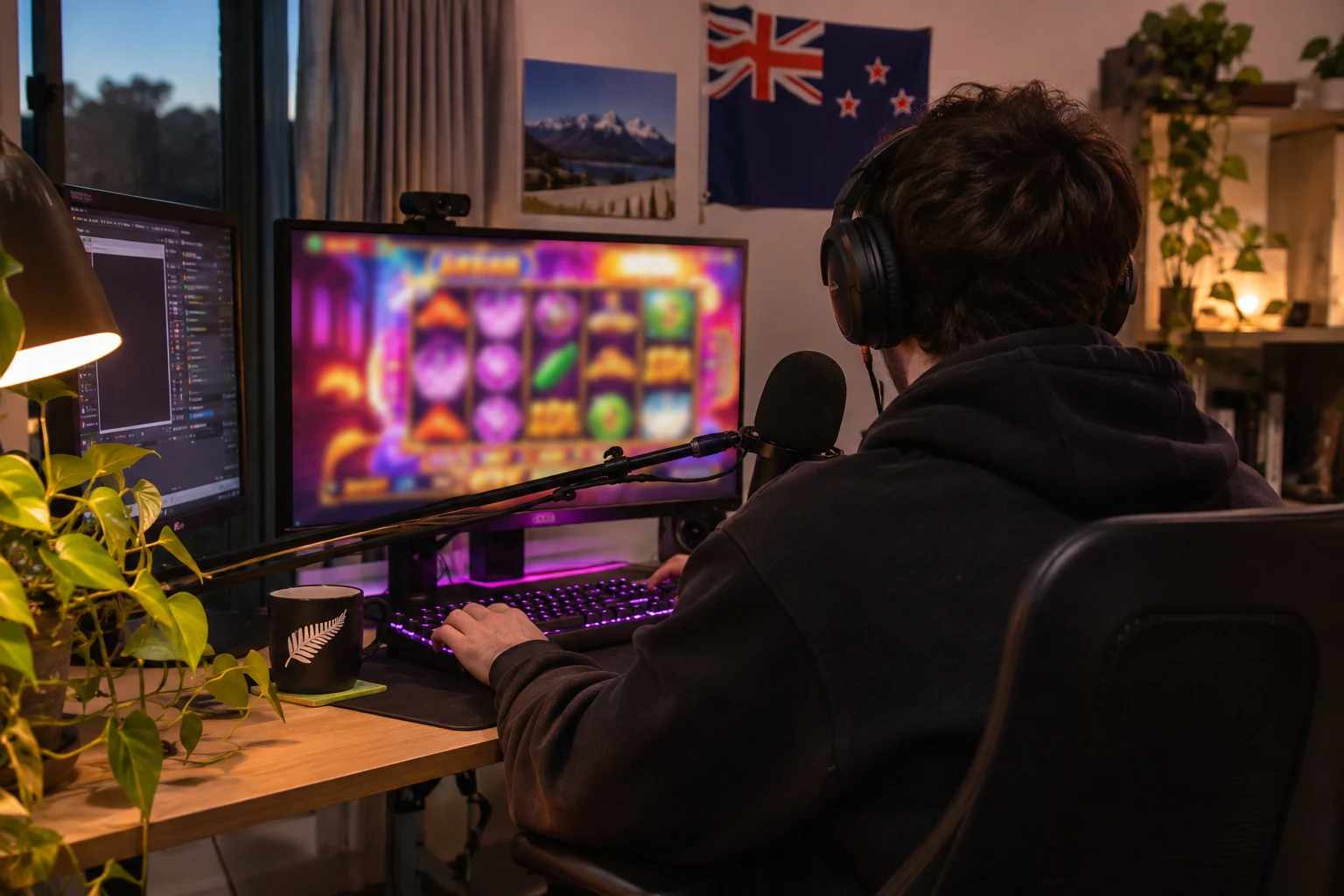
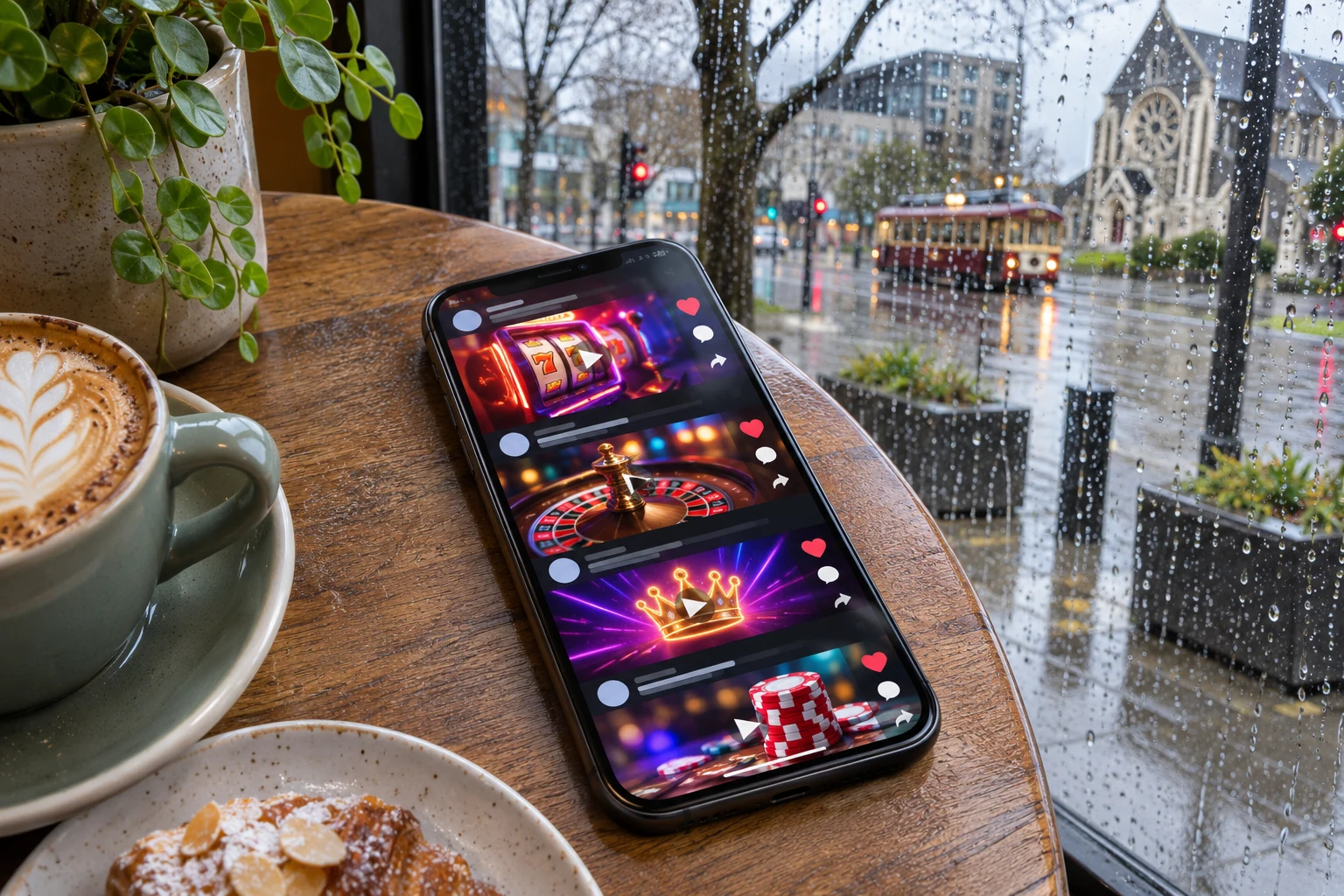
A pokie flashes a five-figure win. Someone on a livestream cheers. A creator posts a screenshot of a payout, then drops a casino code into their Instagram Story. The clip lasts seconds; the questions it leaves behind are much bigger. Was the money genuinely won, was the creator paid to post it, and is that casino even allowed to advertise to people in New Zealand?
Gambling on social media sits at the intersection of entertainment, online casino marketing and influencer culture. It can look like a TikTok reaction, a YouTube stream, a sports podcast, a Facebook discussion or a glossy event Reel. The commercial message is not always obvious. For audiences in Aotearoa New Zealand, identifying who benefits from a post matters just as much as the game on the screen.
What counts as gambling content on social media?
A gambling post does not have to contain a direct invitation to place a bet. Social feeds carry several different kinds of content that can make wagering feel ordinary, exciting or socially rewarding:
- Real-money casino clips: online pokies or slots, roulette, blackjack, live-dealer tables and fast-paced games such as crash games, often edited around a large payout.
- Betting entertainment: sports predictions, racing tips, esports commentary, reaction videos and podcasts where odds or betting brands form part of the conversation.
- Commercial promotions: paid partnerships, referral links, bonus codes, giveaways, sponsored livestreams and branded creator content.
- Gambling-like games: free-to-play social casino apps, simulated slot machines and gaming features such as loot boxes. These overlap visually with gambling without necessarily offering cash winnings.
- Organic discussion: people sharing losses, wins, criticism, recovery experiences or news about gambling. Mentioning a casino is not automatically advertising it.
That last distinction is easy to lose. A person talking about gambling harm and a creator promoting an offshore casino might use the same platform, the same game footage and even the same brand name. Their purpose, financial relationship and legal position are not the same.
How a casino win becomes viral entertainment
The highlight-reel effect
Social video rewards moments that make people stop scrolling: flashing reels, a roulette ball landing, a streamer shouting and a balance suddenly jumping. Losing sessions, repeated deposits and uneventful spins rarely make equally compelling clips. Viewers see the exceptional result without seeing the full playing history.
A payout screenshot also tells only part of the financial story. A NZ$2,000 payout against NZ$3,000 in deposits is a NZ$1,000 net loss if no other funds remain in the account and no other withdrawals were made. The useful figures are total deposits, total withdrawals, the remaining balance and any promotional credits or wagering conditions. A dramatic win on its own cannot establish that someone made money overall.
Influencers turn familiarity into credibility
Creators build trust through repeated everyday contact. When a familiar face switches from comedy, fitness, fashion or gaming to casino content, the promotion can feel more like a recommendation from a friend than an advertisement. A “paid partnership” label, commission-based link or discount code changes the meaning of that recommendation: the creator has a commercial interest in the audience's response.
Referral systems can reward a publisher when someone registers or meets an agreed condition. Other sponsorships pay a fixed fee for content, without a payment depending on sign-ups. Those arrangements are not interchangeable, and a creator's apparent gambling balance does not reveal which model is being used. A claim of a personal win is not a substitute for disclosure of a commercial relationship.
The feed keeps the theme in circulation
Short-form clips are easy to repost as memes, reactions, “biggest wins” compilations and comments. Engagement with one gambling-related video can become a signal used in personalising a feed; the precise recommendation systems differ among platforms and are not fully visible to users. Hashtags, creator collaborations, group chats and private communities carry the same topic beyond the original advertisement.
Instagram Reels and Stories, TikTok, YouTube Shorts and longer livestreams each package the hype differently. Twitch and Kick are associated with live creator culture, while Facebook groups, Discord servers and Telegram channels can host discussion and shared links. A platform's advertising approval or content moderation rules should not be confused with permission under New Zealand law.
New Zealand's own gambling-and-influencer crossover
The Spinoff has documented TAB NZ, Betcha and commercial partner Entain appearing in sports events, podcasts and influencer content, including Chasing the Fox and The Grand Tour. Entertainment can carry a betting connection even when a post focuses on the event. TAB sports and racing promotions follow different rules from online casino advertising.
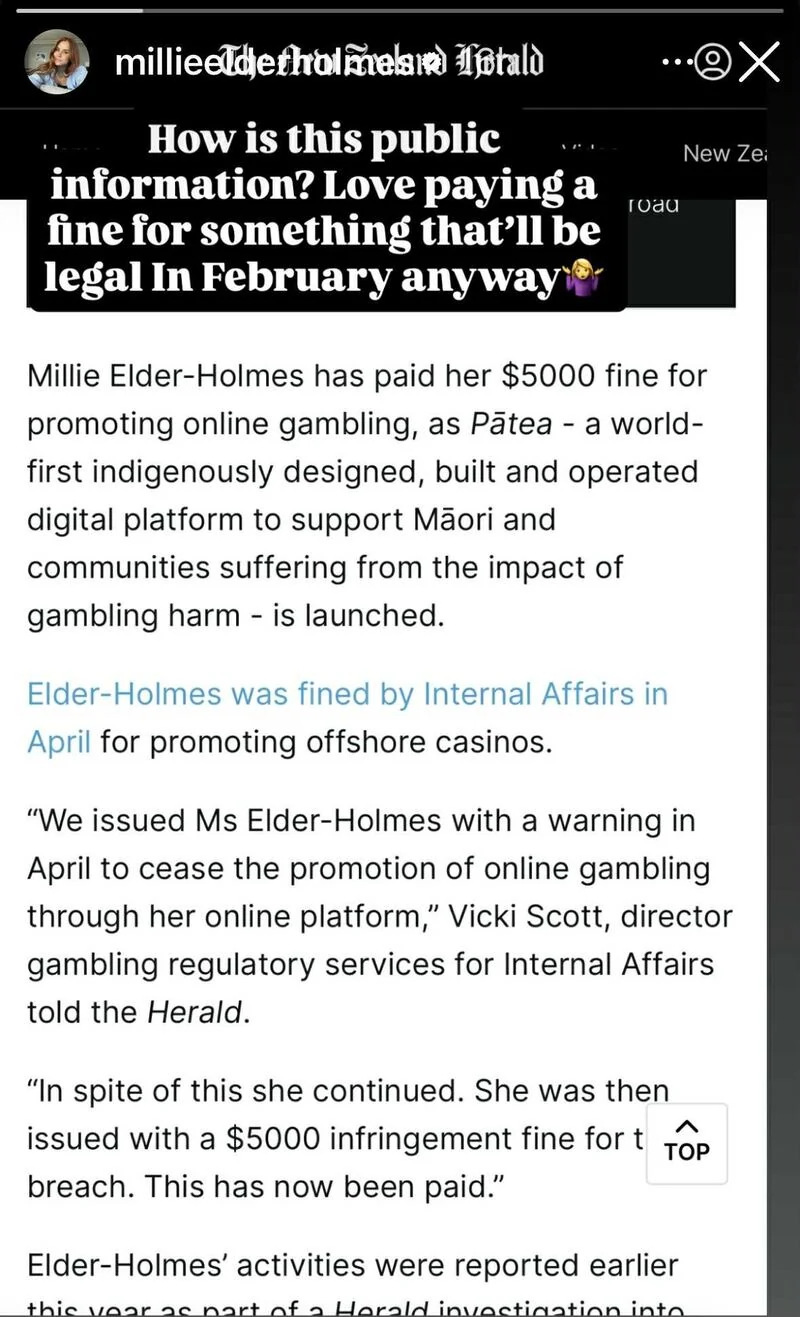
The DIA warned influencers about overseas casino promotions in 2025; Millie Elder-Holmes was fined NZ$5,000 in a widely reported case. Te Ao M?ori News also reported that Hawke's Bay creator Jabez Makawe declined approaches connected to RollXO and N1Bet. These cases show why audience location and referral links matter; the operator names are examples, not endorsements.
Can a creator's big casino win be trusted?
A real win can be displayed selectively. It can also be surrounded by missing information about deposits, previous losses, withdrawals, sponsorship payments and conditions attached to bonuses. The same visible result can represent a lucky recreational session, a promotional demonstration or part of a broader commercial campaign.
Three details tell more about a claim than the amount flashing on screen: whether the creator received money or credits from an operator, whether any referral or sponsorship deal exists, and whether the displayed return represents net profit after all deposits and withdrawals. When those details are missing, the clip is entertainment rather than reliable evidence of likely earnings.
Why young people encounter casino-like content before they gamble
The overlap between gaming and gambling can begin long before anyone opens a real-money casino account. Free-to-play slot simulations reproduce reels, jackpots and celebratory animations. Loot boxes and other microtransactions introduce paid chance-based rewards into video games. Neither feature should automatically be labelled a cash-out casino, but both can make gambling-style mechanics familiar.
The New Zealand Ministry of Health's 2025 findings on children's exposure reported an average of 1.3 online exposures to gambling or gambling marketing per hour in the measured material. Gaming accounted for 44.4% of online exposures, and nearly one-third occurred on social media. The figures describe the study's observed exposure, not the number of casino adverts any individual child will see in every hour of browsing.
Celebrity content and live reactions can make those messages particularly hard to recognise. A 2024 systematic review of social-media gambling advertising identified blurred boundaries between marketing, influencer posts and user-generated content. Visibility does not establish that everyone who watches will gamble, but repeated exposure can shape what looks familiar, socially accepted or low-risk.
The impact of that messaging is not uniform. In Aotearoa, advocates including Hāpai te Hauora have raised concerns about online casino promotion in Māori communities, while public-health services recognise unequal gambling harm affecting Māori, Pacific peoples, younger people and households under financial pressure. A culturally recognisable creator can carry a message into a community more persuasively than an anonymous banner advert. The responsibility for deceptive or unlawful marketing still sits with the businesses and promoters involved, rather than with the audience they reach.
What social platforms can and cannot protect users from
Moderation rules vary. YouTube's regulated-goods policy restricts links and directions to uncertified online gambling sites and allows age restrictions on casino-related content. TikTok has its own market-specific gambling-ad rules and certification procedures. Neither platform policy acts as a New Zealand casino licence. Reposts, cropped logos, private messages and content that presents itself as ordinary entertainment can also be harder to classify than an obvious paid advert.
For a person trying to reduce exposure, the relevant controls include blocking or muting accounts, using “not interested” feedback, reviewing followed pages and limiting direct messages or invitation links. Someone dealing with persistent casino promotions can preserve the post's URL and disclosure details; the DIA accepts reports of suspected unlawful online casino advertisements through its published advertiser and player guidance. The most useful evidence is the actual post, its audience context and the promotional link, not a guess about the creator's intentions.
When gambling hype stops being harmless entertainment
The warning signs are often practical rather than dramatic: checking gambling streams compulsively, hiding losses from whānau, using money intended for rent or bills, increasing deposits to recover earlier losses, or feeling unable to switch off casino content. The expectation of a “turnaround” can be reinforced by watching someone else's lucky result, even though their result says nothing about what will happen in the next session.
Free, confidential support in New Zealand is available through Gambling Helpline Aotearoa on 0800 654 655 or free text 8006. Specialist Māori, Pasifika, youth and gambling-debt services are also available. Safer Gambling Aotearoa provides information for people affected by their own gambling or someone else's.